
Sometimes it is funny what motivates me to choose a topic for these posts. Last week Ben went to the temple to receive his endowment, so I spent a few hours with him the night before, preparing him as best I could. Earlier in the year Jed had taught a temple class to him and the other seniors in our ward, and so in general I think Ben was fairly well prepared to enter the temple and experience it.
As an interested and concerned father, I was paying attention to each moment and how he was responding to the Initiatory, the garments, and later the presentation of the endowment. It was a pretty emotional experience for me, and a good one, albeit an overwhelming one, for Ben.
Almost ten years ago, shortly after moving into our house in Highland, Jed and I were asked to serve in a bishopric. One of the things we felt strongly about was teaching a class during the second hour on the Temple. The worst-kept secret in Mormondom is that people get freaked out at the temple, and others don’t get things from it even after years of attendance. We both felt those feelings were unnecessary. If we could rotate the entire ward through the class and prepare younger kids, then maybe we could make a difference and make it a better experience for people in our ward.
It was pretty risky, looking back; our goal was to flesh out the questions that people had kept inside for years. We wanted to talk about the temple in frank and honest ways that we knew no one was used to. We felt inspired, though, to do it, and looking back, it was one of the most impactful things I think we did as a bishopric.
To begin each class, we would create an anonymous survey and ask people to ask any question they had about the temple, even ones they were worried they couldn’t talk about. We then compiled the list and set about creating a four-week curriculum where we addressed those questions and all aspects of the temple. It was awesome, and a version of that class has been taught ever since by either Jed or me.
I have thought about those questions over the years and especially the last few weeks, but not just the content of the questions, but more the fact that they existed at all, and that for many people they just did not have a forum to ask them or to engage with them.
President Ezra Taft Benson alluded to this cultural undercurrent in a talk years ago:
The temple is a sacred place, and the ordinances in the temple are of a sacred character. Because of its sacredness we are sometimes reluctant to say anything about the temple to our children and grandchildren.
As a consequence, many do not develop a real desire to go to the temple, or when they go there, they do so without much background to prepare them for the obligations and covenants they enter into.
This was certainly a common discussion point in our class: this over-cautious approach to the temple. Later, as social media and the internet have forced conversations about the temple into unfiltered forums and chats, Elder Bednar directly addressed this in a conference talk.
In 2019, he made it much easier by drawing the actual line with these two guidelines:
Guideline #1. Because we love the Lord, we always should speak about His holy house with reverence. We should not disclose or describe the special symbols associated with the covenants we receive in sacred temple ceremonies. Neither should we discuss the holy information that we specifically promise in the temple not to reveal.
Guideline #2. The temple is the house of the Lord. Everything in the temple points us to our Savior, Jesus Christ. We may discuss the basic purposes of and the doctrine and principles associated with temple ordinances and covenants.
So, to make it a bit more explicit for this post (and for our classes as well), we will specifically not describe things we have covenanted not to disclose; we will treat conversations around symbols with sacredness, and we will treat all of the conversation as a sacred effort to help people love the temple, instead of being put off by it.
I am going to talk about the temple more directly than you are probably used to, as I attempt to use history, the scriptures, and ancient practices to make the temple more relatable and easier to approach. I am not going to touch anything we promise in the temple not to reveal, and I will most definitely treat the temple with the respect I have for it. I love the temple; I believe it has the power to bring us closer to God, and it hurts me when people miss that opportunity because of things that, in my opinion, can be discussed more openly.
One more thing before we start.
There is going to be more outside ideas in this post — things like ancient Near Eastern temple ruins, Egyptian ritual texts, Hebrew words, and a couple of scholars who are not Latter-day Saints. Ideas and concepts from the ancient world are valuable to us as we approach the temple. I promise to do my best to make them easy to understand, and I hope they will be beneficial. This is also a very long post split into sections, which are like mini-posts.
Since this topic is so important to me, I have provided a link here to a summary of each section, and if you feel you need to read them a section at a time, then I totally understand. I really hope this can be used as a resource for parents, bishops, or anyone looking for a way to help others love the temple.
Section 1 – The Temple Is Supposed to Be Different
And the disciples came, and said unto him, Why speakest thou unto them in parables? — Matthew 13:10
This question was from the Savior’s closest friends, the men who had left everything to follow him, who ate with him, heard him every day, and they asked the same question at the heart of our questions about the temple. Why not give it to us straight and simple to understand?
The answer from Jesus is the same now as it was right before they asked their question – “He who has ears let him hear.” There is something important, maybe even critical, in the way parables and temples are different from our normal way of thinking and learning.
Ancient Forms of Learning
Almost nobody in the ancient world could read. For generations, teaching was passed down through stories; then, even after things began to be written down, reading was a specialist skill — scribes, priests, administrators. For everyone else, meaning had to be communicated in some other way. For the most important things, it was done through symbols.
There is a famous example of this in history. Hammurabi’s law code, which was carved into a black stone pillar over seven feet tall, was set up in a temple where anyone who had been wronged could come and consult it. The interesting thing was that almost nobody who came could read a word of it. What they could see was the picture carved at the top: Hammurabi standing before Shamash, the god of justice, receiving the rod and the ring from his hand.
The text was for the few. The picture was the symbol that impacted the people, as it signified that this law did not come from a king who felt like making rules. It came from God.
Another interesting example is found in the ruins of ancient Near Eastern temples, where archaeologists found small statues of ordinary people. Not gods, not kings. Regular worshippers, made in their own likeness and placed in the sanctuary. Most people had no access to the daily temple service; they could not attend, and they could not have read the liturgy if they had. So they had a figure of themselves made and set it in the holy place, to be a symbol of their desire to be in God’s presence.
Somebody who could not read and could not participate still found a way to be present. Through an object that symbolized their faith.
So, why are symbols still useful?
If symbols and oral stories were the ancient world’s primary form of communication, then why are they still useful when nearly everyone can read now or create short videos that can clearly explain almost everything?
“A picture is worth a thousand words.” – Somebody
There is no doubt that explanations are more efficient. They are refined, searchable, generally easy to understand, and, more importantly, meant to be definitive. An explanation gives you a perceived meaning that can last forever. You read it, you decide what it means, and that decision lets you be finished with the idea and feel confident that you understand it.
A symbol is the opposite of those things. Symbols are usually unrefined and vague, difficult to catalog for searching, not very easy to understand, and, most importantly, they are meant to mean different things to different people throughout their lives.

Let’s take a symbol we are all familiar with. The American Flag.
If I asked you to take 5 minutes to think about what this means to you, would it be a single simple explanation? Would it be the same for someone who has served in the military (or had family who did)? What about someone who lives in other countries around the world? Does it mean the same today as it did in 1945?
The problem with symbols is that we are trained so poorly for them. Our schooling, our work, social media, Google, and now AI—our whole way of handling information is built on speed, efficiency, definition, and checklists—break it down, name the parts, put it in a box, move on. That method is extraordinarily efficient and useful in many facets of our lives, but it is not, in my opinion, useful for approaching God.
We need two things when approaching God that symbols do much better than explanations.
- Engage with God – “Seek and ye shall find.”
- Symbols and parable-type stories are not efficient and require us to search and think. There is no quick search, no asking AI, no simple explanation.
- Remain Relevant – “Draw near unto Me and I will draw near unto you.”
- Symbols prevent us from having so much certainty that we become finished with them and move on. They are meant to mean different things to different people; they are meant to mean different things throughout our lives. This makes it more possible for God to engage with us because we are actively engaging with him instead of remaining ignorant in our certainty.
President Dieter F. Uchtdorf said something that I think illustrates why symbolic thinking aids in our approach to God:
Brothers and sisters, as good as our previous experience may be, if we stop asking questions, stop thinking, stop pondering, we can thwart the revelations of the Spirit. Remember, it was the questions young Joseph asked that opened the door for the restoration of all things. We can block the growth and knowledge our Heavenly Father intends for us. How often has the Holy Spirit tried to tell us something we needed to know but couldn’t get past the massive iron gate of what we thought we already knew?
We sometimes assume that symbols are simplified versions of important explanations — the picture book we outgrew when we learned to read, but as Hugh Nibley so aptly said, the temple is a school, and not a passive one – it requires our minds to be clear and active because symbolic thinking is not easier than reading. It is harder and yet so much more important when it comes to spiritual learning.
You are in good company
It is in our nature, when we cannot understand something, to assume that we are the only ones. We look around us in a classroom, or in a meeting, or in the temple and think, “Why am I the only one not getting this?”
I want to say that this is almost never the case, and when it comes to the temple, I would say it is true for everyone, not just you. President David O. McKay once stood in front of a room full of stake presidents and told them about his niece, who came out of the temple and said her sorority initiation had been more meaningful. And then he said this: she was disappointed in the temple. I was disappointed in the temple. And so were you.
This universal feeling, that comes when we don’t understand something, is natural, but that does not mean it is not worth sharing explanations, or our own thoughts about what symbols mean. In every other situation in the world, we talk about our ideas and thoughts, but because of some of our traditions, we almost never talk about our ideas about the temple, and this has made it exponentially more difficult for us.
Recently, the First Presidency has made significant adjustments to the Temple Endowment to provide ways to interpret the symbolism, and this is a welcome change. Also, we should be talking about it more with our families so we can learn together. This is not so we can default back to an easy explanation of things, but more so that we can engage together and learn from each other, which is where some of the best revelations are received.
The temple is meant to teach us differently; it is meant to make us work; it is meant to change all through our lives, and most importantly, it is meant to bring us closer to God because of those features.
Change is Good
“For do we not read that God is the same yesterday, today, and forever.” – Mormon 9:9
Because of this scripture, we often assume that if something is from God, it should never change. Yet, the thing about temples is that they are always changing.
What is up with that seeming contradiction?
I think it is easily solved by admitting what the temple and the symbols are actually meant to accomplish. They are there for us – to help us approach God and engage with Him, and because we as people change, then the thing that exists for our express purpose must change in order for it to fulfill the measure of its own creation.
The truth of this is apparent from a mountain, when there was no building and no nation to build one. A tent, carried and struck and carried again, because the people were still moving. A temple in Jerusalem, permanent, once they settled.
In modern times, it seems change has been more constant than stability. From an upper room over Joseph Smith’s store in Nauvoo and a day-long ceremony, to the 40-year-long build of the Salt Lake Temple and the beginning of an ever-changing endowment presentation for the next 130 years. Again, I see this is something that we should celebrate, and I will give a particular example.
In 1953, President McKay called a forty-three-year-old man in the Missionary Department named Gordon B. Hinckley into his office and gave him a problem: the new temple in Switzerland would serve Saints across Europe who spoke eight different languages, and there was no way to run the endowment for all of them. After weeks of study and prayer, Hinckley proposed presenting it as a film. The First Presidency and the Twelve approved it, the fifth floor of the Salt Lake Temple was turned into a movie set, and — because the Church had no way to dub a soundtrack — they shot the entire thing over again in each language.
When we wrap our heads around change being valuable, then it also creates the additional contrast of the things that have not changed. The things that have remained constant then become symbols of their own. Symbols of the things God may want us to prioritize, or things that have applicability for all of His children. Covenants, progression, creation, fall, atonement, and posterity are things I am excited to discuss as we continue the post, but what makes the temple special is that it presents these concepts differently than what we are used to. I hope that it can inspire us to find new meaning because of that.
Section 2 — The Temple Is Work
Let them make me a sanctuary; that I may dwell among them. — Exodus 25:8
The Hebrew etymology for the temple is unsurprisingly the House of God. The place where God lives. So the most basic way to look at how we engage with the temple is that we are going to God’s house. Why would we go there if not to encounter Him?
Another detail in the Hebrew Bible that scholars have noticed and that I find useful. Whenever the text says someone did something before the Lord, you can almost always assume there was a temple at that spot. The phrase comes straight out of the idea that the temple is where God lives. Which means a temple is not defined by what it is made of or how it is decorated. It is defined by who is home.
So what does a house have to do with work? Well, one way of looking at this particular symbol of a home is that anyone who has ever built, maintained, and lived in a home, particularly with children, knows it is nothing but work; yet in the end, there is almost nothing more rewarding than having a home full of children. In any case, let’s take a deeper look.
Building the Temple is Work
Creating anything is difficult, and it takes work; building a home for God, or ascending to where He is, also takes work. This has been true from the beginning.
Adam and Eve were instructed to dress and keep the entire Garden of Eden after all the work required to create the Earth. Sinai was a mountain in a desert, and Moses climbed it at eighty years old, after three days of the whole camp preparing. The tabernacle was carried. Taken apart, hauled across a wilderness, and set up again with all of its furnishings, over and over, for forty years, by people who were already exhausted. Solomon’s temple took seven years. Kirtland was built by Saints who had nothing, and Nauvoo was built by Saints who were about to lose everything. The Salt Lake Temple took 40 years and two attempts to build.
A very interesting snippet from Hugh Nibley showed me that building a temple is more than just a cost though. When the Provo Temple was built, the work was turned over to contractors, and signs went up around the site saying that nobody but employees was allowed in. Nibley says the Saints who remembered building earlier temples felt cheated. If the work were only the price, then being excused from it would be a mercy. Nobody feels cheated at being handed something for free. To those Saints, they were not being spared a burden. They were being locked out of the best part – the work.
What We Do in The Temple is Work
There is no question about this point. We actually call what we do in the Temple – “Temple Work.” I think it is a little more than that, though, in the end. What makes this kind of work different is that the majority of the time we are working in the temple, we are doing that work for others, more particularly those who cannot do it for themselves. This is the type of work that is most similar to Jesus’ work of the atonement.
Anciently, the High Priest on Yom Kippur would perform all of the temple rituals for himself, then again on behalf of all of Israel. His work was meant to provide the atonement for all of Israel as he made covenants and approached God in the Holy of Holies. We will discuss this more later, but this vicarious work is God’s symbolic way of letting us help, letting us be a part of building Zion, and feeling the joy of redemption. There are probably other ways of solving the problem of those who have passed without the gospel ordinances, but in this version God has asked us to work with Him, and as partners with Jesus Christ in the most important work God has to do.
Learning from the Temple is Work
The work this post is most concerned with is learning. We have already spent some time setting the stage regarding symbols, but I will freely admit that learning through symbols is genuinely difficult. Identifying characters in a story, figuring out who they stand for, how they apply to you, deciding whether you agree — that is hard the way a good literature class is hard. Nobody hands you the answer. You have to debate ideas in your mind. Some ideas feel good, but others leave you unsettled. Different people read the same thing and come out somewhere different, and neither of them is wrong, but maybe they are not right either.
The temple is supposed to make you think, ponder, ask why, disagree, get frustrated, and keep looking. Because the looking is where God shows up. Just like with Job, his encounter with God came in an inexplicable whirlwind. The revelation comes because we are engaged, not when we have finally “understood.” I think that a lot of our problem is that we want to understand “what it actually means,” instead of just always engaging with “what it could mean in your life or others you love right then.”
One practical thing I would recommend for each of us when attending the temple is this:
Do not try to catch all of it.
The temple is meant to contain a lifetime of learning, so keep it simple, focused, and try to engage with just one thing. One image, one phrase, one moment that snags on something happening in your life right now. Take that home and think about it more, talk about it, and pray. That is seeking, and when we are seeking, we will find.
The Work Has a Payoff
I have always looked at scripture patterns as symbols. In our full set of Latter-day Saint scriptures, the terms “Knock and it shall be opened,” “Ask and ye shall receive,” or “Seek and ye shall find,” have been used 16 times either as a set or as individual occurrences. So clearly this is a symbolic pattern, but I think we too often think of it as if, by simply saying the words of asking, we will be given everything. I know we don’t think that logically, as we know that isn’t true, but we certainly wish it. We start tying it to how faithful we are, or if we are asking for the right things. It becomes pretty tough to figure out what this pattern is telling us, really.
It is worth thinking about the fact that half of the times that all three phrases are said together, it happens at the temple. So what if these directives are a symbolic pattern meant to encourage us to keep knocking, keep asking, keep seeking God? If I were looking for someone, the first place I would look is where they live. My belief is that if we engage with the Temple, then we will eventually encounter God, because it is His house. He is there, and it requires us to not just show up, but to work.
Draw near unto me and I will draw near unto you; seek me diligently and ye shall find me; ask, and ye shall receive; knock, and it shall be opened unto you. – D&C 88:63
Section 3 — The Temple Gets You Ready
Who shall ascend into the hill of the Lord? or who shall stand in his holy place? He that hath clean hands, and a pure heart; who hath not lifted up his soul unto vanity, nor sworn deceitfully. — Psalm 24:3–4
Lord, who shall abide in thy tabernacle? who shall dwell in thy holy hill? He that walketh uprightly, and worketh righteousness, and speaketh the truth in his heart. – Psalm 15:1-2
For sections 3 thru 5, I am going to take us all through the LDS temple experience. As I mentioned before, I am going to treat this with reverence, use historically accessible references, but also do my best to help us understand the Temple better so we can benefit from its wonder.
Psalm 24 and Psalm 15 are asking the very first question that needs to be asked when engaging with the Temple. Who should be going in the first place? Of course, we know that anciently it was a highly limited group of people, but in our day we want everyone to receive the temple ordinances. So, I guess the better question now is, “What are the qualifications for us to go?”
Gestures of Approach
For the High Priest in Israel, and many other Near Eastern Temples, the sequence of actions that led the High Priest on his journey to “ascend the hill” and approach God are described as gestures of approach. The actions or conditions were the rituals necessary for the High Priest to a) represent Israel in the rituals and, b) symbolically bring Israel back to the presence of God.
The High Priest had to be found worthy to approach at all.
Washed with water and then anointed with oil.
Then clothed in vestments that were set apart for the rituals.
The High Priest would then be given a new name.
His hands were filled — that is the literal Hebrew idiom for ordination, to fill the hand.
And then he would make ritual offerings and covenants, before finally passing through the veil of the temple to the Holy of Holies (or the Mercy Seat).
John Lundquist, who has spent a career cataloging what ancient temples had in common, puts it plainly: across the ancient Near East, priests and worshippers were washed, anointed, clothed, given a new name, and symbolically initiated into the presence of deity.
These steps remained the same across religions, languages, and centuries.
You can read Israel’s version in Exodus 28 and 29, and Leviticus 8. Aaron and his sons are brought to the door of the tabernacle. Washed with water. Oil poured on the head. Dressed in clothing God described in detail, down to the thread. Set apart to act on behalf of everybody else.
So as we consider these gestures of approach, I hope to get you thinking about these symbolic steps in new ways.
Are you Worthy?
The first gesture of ancient priests is something we would define in our day as worthiness, and for us that is defined within the process of receiving a temple recommend.
When I was a missionary, I had to reconcile my feelings about worthiness because, unfortunately, the word worthy just didn’t sit right with me. Worthy sounds like a grade, and from where I sat, many people whom I was inspired by and who went to the temple would have received wildly different grades. It sounds like a threshold you either clear or you do not, and maybe like the end of the process, when I felt like it was the beginning of the process.
When I read the temple recommend of the Psalms, it feels like what defines our worthiness to enter the Lord’s house could be simply that we are honest about where we stand, that we want to do good things, and most importantly, we want God’s help to change. This honest need seems to define what it means to be worthy.
In studying the temple in ancient languages, there is a fascinating idea that everything inside of the temple was described as Holy, where everything outside was considered profane. When most of us hear that the world outside the temple is called profane, it seems like a synonym for wicked. It is not. The Latin is pro fanum — literally, outside the temple. The profane world is not the evil world. It is just the world that is not the temple.
So the entire point of the first gesture in our approach to the temple was for us to go from the outside to inside, and so the defining characteristic is that we want to get inside and we know we need help.
It feels like I am ignoring the actual questions we must answer to receive our recommend, but I am not. I have never believed the questions are a scoring rubric where if you fail one you are not worthy; I think they are an aspirational set of questions that narrow our minds around the real question: are you committed to this?
We are never perfectly worthy, and then we go to the temple. We are going to the temple because we want God’s help.
Washed
The next two gestures of approach are rich with symbolism. We call them the Initiatory Ordinances, and they are to prepare us to become Kings and Queens unto God. That statement of what they are preparing us for is a critical point.
There are a number of references to this throughout scripture: John writes that Christ hath made us kings and priests unto God. At Sinai, before God says anything else to Israel, he tells them they will be a kingdom of priests, and an holy nation.
More interestingly, almost every coronation ceremony for becoming a King or a Queen includes initiatory rites that include washing and anointing. Being washed and anointed is, in fact, one of the most important things that happens when someone becomes a King or a Queen.
I am going to use the idea of King or Queen more than priest and priestess, as it has more contextual significance in our education, and so it will make it easier to envision. However, I want to point out that in our temple rites, the priest and priestess show up the most vividly in the initiatory. In our modern initiatory rite, the washing and the anointing are performed by priests for the men, and priestesses for the women. For many women, this is a special moment, because it is a symbol that evokes the power of the priesthood in full force by an ordained priestess.
For the washing, these officiators use a drop of water to symbolically clean us so we can be prepared and clear of mind for the responsibilities and blessings that come from being a King or Queen.
For some of us, the titles of King or Queen may carry a negative connotation. Like someone who is above everyone, someone who controls us, but anciently, and especially in a gospel context where we are approaching God, it is the reverse. Jesus was blunt about this reversal — he that is greatest among you shall be your servant. Being the King or Queen means we are agreeing to be the servant of everyone.
Understanding this clearly helps us realize that if we want joy in our friendships and posterity, we must embrace the responsibility and burden of teaching, learning, serving, giving, and sacrificing for them.
The promise of clarity in our minds can help us even in our day-to-day lives. President Boyd K. Packer said it well:
Sometimes our minds are so beset with problems and there are so many things clamoring for attention at once that we just cannot think clearly and see clearly. At the temple the dust of distraction seems to settle out, the fog and the haze seem to lift, and we can “see” things that we were not able to see before and find a way through our troubles that we had not previously known.
Being washed is an incredible blessing, a way to open our eyes to not only what we can become, but also to see clearly what is most important in our lives.
Anointed
Anciently, being anointed meant being set apart. Sanctified and qualified for something you cannot yet do. So after we are washed, we move into another small room, and the officiator takes a drop of consecrated olive oil and sets us apart as Kings and Queens.
Prepared and set apart, but not yet a King or Queen, so why the two parts? The prayers and the blessings are exceedingly similar. Preparing and being set apart also don’t feel too different.
For me, the answer is in the oil. Gethsemane means the olive press (how oil is made), and the word Christ translates “Anointed One.” This symbolism is a powerful reminder that in this moment Christ has been made our partner as we progress toward God, as we learn how to be Kings and Queens.
He has purchased us with His atoning blood, and He has committed to being with us all the way.
A Constant Reminder
The final step of the Initiation Rites of the temple presents us with two very important symbols.
The first is that we become authorized to wear garments and commit to doing so throughout our lives. “Unto Adam also and to his wife did the Lord God make coats of skins, and clothed them.” It is critical to remember that, for these clothes to be made, something had to die, and the skin of the sacrifice would cover them as protection in the fallen world.
I tell the people in my classes, and my kids, that the garment is just a reminder that my partner in this life is Jesus Christ. I want Him to be my partner, and wearing the garment is a way to remind me of that partnership.
The second symbol is that we are presented with a “New Name.” I am going to talk more about this during the endowment, but I will point out here that receiving a new name after being initiated is incredibly common; we just don’t connect the dots. Many kings, and almost all the Popes in history, for example, received new names after they were anointed to their callings. The names were symbols of who they would emulate, or try to become, or reminders to them of their new sacred calling.
Ok, so now that we have been initiated, we are ready to receive the endowment, or gift, that God has prepared for us as we continue our approach to God.
Section 4 — The Temple Endowment is a Drama
Before we get into what happens in the endowment, let’s spend a few minutes just doing some associations and foundation work. The way we define endowment in our times is a gift. But the older sense of the word is clothing. When Christ tells the apostles to wait in Jerusalem until they are endued with power from on high, the word underneath is the Greek endyō — to put on, to be clothed with something.
And the Hebrew behind our word atonement, kaphar, most often carries the sense of covering.
Two different languages, two different words, and they have a similar meaning. Something is put on you. Something covers you. So in a symbolic way, the endowment is meant to teach us how to receive the gift of being covered by Christ’s atonement.
As I approach the endowment, I need to say first that my goal here is to open our minds to possibility, to remove the “iron gate” of what we already know, and hopefully make the endowment a more meaningful experience.
In Ancient Greek dramas, there were five acts, and the endowment follows the five-act structure, and we should absolutely view this presentation as a sort of metaphorical play. The temple itself actually tells us everything is a symbol, and it is NOT a narrative historical account. I cannot emphasize this enough.
The Five-act Structure is this:
- Establishing the World and the Characters
- The Conflict
- The Turn of Events
- The Consequences
- The Resolution
An important question to ask is, why would the endowment follow these same ancient patterns as our most sacred and important religious ritual? Why wouldn’t it be a list of things to do? Why wouldn’t it be some profound explanation of our most difficult questions? Why would it be so foreign to anything else we experience in our religious lives?
This is why seeing it for what it is, an ancient drama, is so critical. In a drama, the characters, their actions, their decisions, and all the things that happen are exaggerated and purposeful, with the intent to get us to think, compare, wonder, and question.
Telling us things, or giving us information, would make it meaningless over time; a drama with all kinds of symbols and idiosyncrasies makes it something different people can learn from all throughout their lives.
As I take us through the endowment, I am hopeful that the ideas and symbols I point out will just make us think. I will not be revealing sacred things I committed to keeping sacred, but I will be using history and examples of ancient times to highlight the value of this kind of gift that we receive in the endowment.
Act I — Origins
As we enter the endowment room, it feels like we are entering a theater with the seating oriented toward the altar where the presentation of the endowment will happen. When the presentation begins, we are immediately presented with an account of the premortal confrontation between Lucifer and Jehovah that results in Lucifer being cast down from heaven and the subsequent creation of the world – initiating the plan of salvation.
We then watch a presentation of the creation account, and Adam and Eve being placed into the Garden of Eden. You would be surprised how many people are confused that the first part of the endowment was a story they had read or heard their entire lives.
So why spend the opening of our most sacred worship on the one story everybody in the room has already heard?
Creation is about Functionality
Creation accounts were not filler in the ancient world. They were the standard way a culture told its people who they were and what they were supposed to be doing here. This was a very common purpose for temples.
The Shabako text from Egypt, one of the oldest religious documents that survives, appears to have been the script of a drama. Actors performed the scenes while a priest narrated and explained what was happening. The Babylonian creation epic was read aloud in Marduk’s temple on the fourth day of Nisan, every year, and the combat at its center was ritually reenacted. In the Second Temple at Jerusalem, laymen read the Genesis creation account aloud while the priests performed the sacrifices.
John Lundquist, who has spent a career cataloging what ancient temples had in common, describes the New Year rites this way: texts were read and dramatically portrayed that recited a pre-earthly war, the victory of the forces of good led by a chief deity, and then the creation and establishment of the cosmos, cities, temples, and the social order.
So what is our origin story trying to tell us?
Let’s start with what it is not trying to tell us – how old the earth was and how it was actually created.
Whether you believe the earth we live in was created in six days, six thousand years, or billions of years is irrelevant in the temple, because the creation story was teaching us something else entirely.
John Walton, an Old Testament professor at Wheaton and not a Latter-day Saint, has made this case at book length. His argument is that Genesis 1 is not describing the manufacture of material at all. It is describing function — what things are for, and what role each one plays in an ordered system. Light is separated from dark so there can be time. Waters are divided so there can be weather. Dry land appears so there can be food. Each day is not a construction milestone. It is a purpose being assigned.
And the seven days, he argues, are a temple inauguration — God ordering the cosmos as his house and then taking up residence in it.
Which finally explains the seventh day being the day of rest, when God should not get tired. Deities rest in temples. That is what a temple is for. God resting is God moving in.
Walton is careful to say he believes God is responsible for material origins. He is arguing that Genesis 1 is not the text that addresses it. Different question for a different era.
So what was the earth actually for?
The earth is our temple. God built a house, moved into it, planted a garden inside, and put us in the garden with work to do.
And it works in ways we do not understand and probably cannot. Our functioning world is an incomprehensible piece of engineering, and we live inside it often without noticing any of it. That is what a temple has always been — a place built with enormous care for a purpose the people inside it only partly grasp.
We were placed here on purpose, in a house made for us, to become something we are not yet. However, for that purpose to be fulfilled, we needed to have experiences that would help us grow, and for that there needs to be some kind of opposition.
Act II — The Conflict in the Garden
I have always been fascinated with the story of Adam and Eve. I am not sure there is anything in the Bible that has been more debated or written about over the centuries, but for our purposes when engaging with the endowment presentation, it is critical to remember that, just like creation, this is not a scientific narrative of how human beings were biologically created. That isn’t even close to the point of this story.
In the garden is where the story of the children of God begins, and at the center of it is the conflict that we will wrestle with throughout our mortal lives. This is where we get to learn about ourselves, and the characters, the plot, the choices and consequences, and the journey are meant to be very specifically symbolic to our own lives.
The Garden is a Temple
The garden is sacred space. It is not a building, and there is no altar, but Donald Parry reminds us that a temple does not require an edifice. Eden is holy because God is present and walks there.
Adam and Eve are then put there to dress it and to keep it.
Those two verbs in Hebrew are ‘abad and shamar, and they are the same pair used in Numbers for what the Levites do in the tabernacle — serve it and guard it. So when the story starts, we are in a temple, with priestly work to do, and God walking there with us.
A Succession of Out of Place Events
There are all kinds of things that happen in the endowment story that give us clues that we are watching a drama after our arrival in the Garden:
Conflicting fruit options. Adam and Eve are given conflicting commandments represented in fruit options. What? It is interesting, though, as a symbol. You can either eat the fruits of your labor in doing your duty in the Garden and have peace and comfort in the presence of God, or you can eat of the fruit of gaining knowledge of good and evil and have to leave the Garden. This really doesn’t make sense as a narrative, but it is an incredibly clever rhetorical device that challenges us to think about what matters to us and why it matters. Can wrong things be good? Can right things be bad? For the time being, though, Adam and Eve are content in the Garden just doing their thing.
Lucifer shows up in the garden. He was cast out, and no unclean thing can dwell with God, but here he is, walking around inside a temple where God is present, with full access to the two people God just placed there. If this were a historical account, that is a security problem. As a drama, it is the only way to stage the scene, because the whole point is that opposition has to be available to them. Lucifer eventually convinces them that knowledge of Good and Evil – agency – is better than eternal naivety.
God asks where Adam is. Where art thou? And then who told thee that thou wast naked? God, who is omniscient, doesn’t know where Adam is or what just happened? Read as a chronicle, that is incoherent. Read as a drama, it is the oldest device there is — the question is not for God’s benefit. It is for Adam’s. He is being made to say it out loud and to reiterate to the audience what was going on in his mind so we can wrestle with the sequence of events.
Seemingly over-the-top consequences. After God arrives on the scene and the consequences begin to be doled out, no one is spared. Lucifer is cursed even further. Eve is promised all kinds of problems, and Adam is sentenced to nothing but hard labor and problems the rest of his life. Dang! Of course, if we take a step back, we realize that rarely are the consequences so severe for the mistakes we make, but this is for effect; it is to hammer home the gravity of the moment, because there are some moments where the consequences for our posterity and us can be that severe.
Overall, this part of the story is very similar to the story we can read in Genesis, with some important differences, but the symbolic pattern of the story remains clear.
There is always a conflict created when we learn new things, because we have new options.
When we have more options, we must make choices.
When we make more choices, there are more diverse consequences.
So with all these choices and consequences, how can we decide what to do?
There are so many questions that have been debated for centuries about this story. Why would God do this? Was there a backup plan? Was this a mistake and then God had to figure it out? In my opinion, the answers to these questions are beside the point, because this quite literally is not a narrative account of what happened. It is a drama meant to make us engage, think, and hopefully get revelation and insights into our own lives.
Eventually, the presentation shows how God enforces the decree that Adam and Eve must be removed from His presence and sent on a journey to learn and grow on their way to return back home to God. We (Adam and Eve) are now cast out of the garden, on our own to figure out what to do next with unlimited options and knowledge available to us.
A Few Symbols that Matter to Me
I want to point out a few illustrative examples in this story that have meant a lot to me.
Shortly after Adam and Eve have partaken of the fruit, Lucifer tells them they are naked, and then a series of actions that show our human nature are demonstrated. Think about these things in the context of us making mistakes:
- They hid what they did
- God asked what happened, and Adam blamed Eve – she did it.
- Eve then says, “the devil made me do it.”
Think of a time when your kids, or siblings, made a mistake; was the sequence of responses similar? I am guessing it was.
Here is what is more interesting: think about the adult-sized mistakes in your life or others, and think about the severity and difficulty that happens when our adult-sized mistakes take on those same patterns. Almost always, when an adult-sized mistake follows those patterns, the consequences are catastrophic.
A foundational lesson for me is this: We must own our mistakes at all costs.
The second lesson here is this. When Adam and Eve were faced with this dilemma and the aftermath of their choice, at no point in that entire sequence does either of them ask for help. They were living in God’s presence; He was likely only a word away, and they did not ask for help.
Now think about the initiatory, and our plan of salvation, and the atonement. The entire process is built around admitting we need help, asking for help. The absence of that admission of needing help was a critical factor in their choice. It is so easy to think our own knowledge, our own logic, our own experience is enough to handle everything, when sometimes all we need to do is admit we need help and we may not have all the answers. This is a hidden symbol in this story, but one that really matters to me.
I have a unique proclivity for thinking I know everything and can handle everything on my own, but I can say that the sweetest, most important moments in my life have been when God, or my family and friends, have been there to help me.
The foundational lesson for me: We can always ask for help.
Ok, back to the endowment. We are now outside of the Garden, and the drama is ready to begin our comeback, to find our purpose, our turn of events.
What will we do?
Act III — Covenants
We are outside the garden. We have knowledge, we have options, we have consequences, but we have no idea what to do.
In ancient dramas, this is the moment the messengers arrive.
The hero cannot solve the problem from inside it. So the gods send someone down — a messenger who crosses over from their side to ours and brings the thing the hero could not have worked out alone. It happens in the Greek plays. It happens in the Egyptian ones. It is one of the oldest devices in the form.
And it happens here. Adam and Eve are outside the garden, and messengers are sent to instruct them, and what they teach is how to make choices and how to get home. This is the turn of events, when we are given the wisdom we could not have found on our own.
Covenants are not Just Rules
Our wisdom comes as we learn five covenants on our journey back to the presence of God.
Obedience, Sacrifice, The Gospel, Chastity, and Consecration.
I am pretty confident that when we think about these covenants, our minds just file them as five more rules on top of all the other rules — probably even elevated rules that seem more important, but another part of the list nonetheless.
This is where we need to be reminded that this is more than a list of things to do; the endowment is a gift, symbols that mean something more. I think these covenants are meant to be a decision-making method, the benchmarks that we should hold our choices against.
The Covenants We Make
The Law of Obedience. Guideposts along our way.
I think obedience is typically thought of as us saying, “I will follow the rules.” Personally, I find obedience as a series of guideposts that give us help along the way. Using the commandments of God as a check against our decisions is good; using words of prophets as a check against our decisions is good; asking God for help when making a decision is good. These are tools that we are covenanting to use. It does not mean we do not make our own choices, but those tools can help us, guide us, and often save us on our journey.
The Law of Sacrifice. Comfort isn’t always the priority.
Making the covenant to sacrifice is making the covenant to care about more than our own comfort and the most convenient path. When we benchmark our choices in the context of being selfless and sacrificing, we are willing to see our choices in a different light, not just in how they impact us in the moment. Forgoing comfort for something more rewarding is something this covenant keeps at the forefront of our minds as we make choices.
The Law of the Gospel of Jesus Christ. Love God and love your neighbor.
What do our choices do to others? How can we do things that bring love and goodness to the world? What can I do to put a smile on someone else’s face? Jesus’s gospel is a radical gospel of loving and giving, and when we benchmark that perspective against our choices, it helps us see things differently.
The Law of Chastity. Our Family and our posterity are impacted by our choices.
The focus here is often on sexual fidelity when we hear this covenant, but it is so much more than that. Our choices in the confines of our marriages and families have generational impacts. The choices we make have centuries of influence, and it is critical to benchmark our choices not just by how they impact our journey, but the lives and foundation that our posterity will build their lives upon.
The Law of Consecration. We need to share.
Sharing our resources, our time, our talents, our money, and our contributions with people around us is the defining characteristic of a disciple of Christ. When I think about how to benchmark this with our choices, the scriptural phrase that comes back to me over and over is from King Benjamin, “Are we not all beggars?” I think this is the way we benchmark our choices. We need a reminder that our blessings, our talents, the things we have been asked to share have been gifted to us. We are their steward, and seeing life that way will impact our choices.
The Master of Lies
During our instruction on these covenants, Lucifer has a moment where he expresses to us that if we do not live our covenants, we will be in his power. This line is interesting as it is loaded with guilt and shame, but it contains a truth and a lie at the same time.
We have all heard Satan named as the master of lies, and if we believe that title, then we need to view his words as something to think about.
He is lying about what our failure to live the covenants means. It only means we are still growing and learning. We are deepening our partnership with Christ with each covenant we make, and mistakes are part of the process.
He is telling the truth, and we will be in his power, if and only if we believe his lie.
If we forget the partnership, stop trying, and stop asking for help, then we will slowly be separated from Christ. Just like in the Garden, Lucifer is hoping that when we make mistakes, we will not ask God for help, and instead we will hide from Him.
Jesus Has Us Covered
As we go through the covenant phase of the endowment presentation, I think it is helpful to take a step back and notice a few very important symbols that are present the entire presentation, but are not the focal point.
I mentioned earlier the way the room is set up feels like a theater, but even more importantly, the way we sit symbolizes a marriage ceremony. Women on one side, men on the other, both facing the altar. Just like a traditional wedding, where the bride’s family and the bridegroom’s family face forward to watch a partnership being formed. This is reinforced as we think about Adam and Eve being the example of the first marriage, and that most endowments are the preceding ordinance before a temple marriage. Yet, we are not really watching a wedding…are we?
One of the most important symbols we learn in the New Testament parables is the bridegroom and the bride. Jesus Christ is the bridegroom, and we are the bride in those parables. So, when we think about Eve as the mother of all living (representing us as the bride), and Paul often referring to Adam as the archetype for Christ (the bridegroom), I believe we are being told that this ritual of the endowment is a demonstration of our vows and commitment to being a partner with Jesus Christ.
These covenants are so much more than new rules. We are making promises in front of an altar, to the person whose atonement covers us, and that is why these covenants are truly a gift. Not only because they help us in our journey, but because they bind us to Jesus Christ and Him to us. We are his, and He will not let us go.
“God is in relentless pursuit of you. He wants all of His children to choose to return to Him, and He employs every possible measure to bring you back.” – Elder Patrick Kearon
Act IV — Living the Covenants
In the typical ancient drama, after the keys of knowledge are obtained, then the hero begins the ascent to rectify the original conflict. In our case, now that we have made the covenants, which only takes 20-30 minutes, the real test is living those covenants and using them for the rest of our lives.
Since the endowment presentation cannot be 40-50 years long, its structure teaches us the lessons that are critical when thinking about how these covenants can accompany us on our journey.
Names, Tokens, and Signs
During our instruction on each covenant, the covenant is accompanied by a name, a token, and a sign. This is without question the most disorienting moment for most temple goers, because we simply do not engage with this ancient form of ritual in any parts of our lives.
I am not going to describe them. That is one of the things we covenant to keep sacred, and I will keep that. But the concepts behind them are not secret at all, and knowing what they meant in the ancient world can help you think about them differently.
Names were never just a label. In the ancient Near East, a name carried identity and role — it told you what a person was for. When something changed, the name changed with it. Abram becomes Abraham. Jacob becomes Israel after wrestling all night. Simon becomes Peter. Saul becomes Paul. This is not a religious quirk; the popes still do it, and so do monarchs. We also do it with other naming conventions – Doctor, Professor, Justice, Sheriff. We give new names to people all the time, and it signifies a part of their identity that we value and respect.
Tokens are something given as evidence of a right, which you present in order to exercise that right. Nibley traces the word this way, and the ancient world ran on the idea. A seal ring pressed into clay proved a letter came from the king. A broken coin, split between two friends, could be matched years later by strangers to prove a debt or a promise. A signet, a shard, a knotted cord — all physical objects standing in for an identity that could not otherwise be verified.
We still do this constantly and have stopped noticing. A signature. A password. A house key. A wedding ring.
Signs were the bodily version of the same idea. A raised hand for an oath. A clasped hand for a bargain. A bow, a kneel, a salute. We put our hands on our hearts when we hear the National Anthem, and we fold our arms when we pray. Using our body to express our commitment is not new; it is ancient, and it is meaningful.
The names, tokens, and signs are signals of our commitment, of our covenants, and most importantly, our partnership with Christ, and a way to prove that we are committed disciples.
Progression
So what do names, tokens, and signs have to do with living our covenants the rest of our lives? That is exactly the question that I spent a decade thinking about before I noticed something that really changed things for me.
As we move through the covenants, the names progress. The tokens progress. The signs progress. Each one builds on the one before it. In some temples, and especially the older temples, this progression accompanies moving from room to room – the garden, to the telestial room, to the terrestrial room, and finally the celestial room. The lighting brightens as we move forward.
Another important thing that happens in this set of progressions is that we put on new clothes and add sacred vestments that resemble the ancient vestments of High Priests.
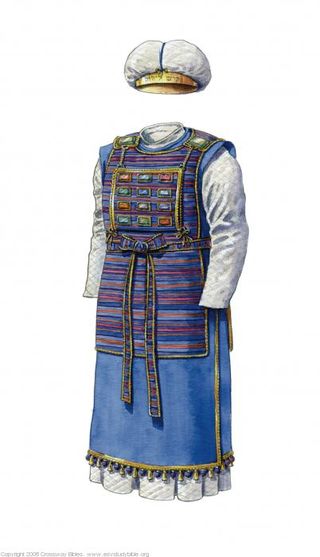
All of these symbols contain a very consistent pattern of progression that is not incidental to the endowment; they are the pattern we need to notice and internalize.
The endowment is telling us that approaching God is an evolution of who we are and how we see things. It is growth, and growth has stages, and you cannot skip one. You do not receive the last name first. You grow line upon line, and precept upon precept.
Not coincidentally, the names, tokens, and signs also symbolically point to Christ, which matters, because it means the growth is not meant to happen by individual force of will, but by submission to our partnership with Him, which is at the heart of this entire ceremony.
Repetition Leads to Results
Another pattern that emerges in the endowment is repetition. We hear a lot of the same things a few different times, and then of course we attend the temple many times in our lives. So repetition is a symbol in the temple.
The temple endowment is meant to be a spiritual workout, something we repeat and think about, and repeat again.
I am a golfer, and no one who decides to become a golfer can go to the range one time and enjoy golf, let alone become good at it. It requires training, lessons, and then repeating the swing over years to enjoy it, and decades to become good at it.
What is interesting is that as you train and learn, you progress and regress; eventually, you love golf. Not because you have mastered it, but because you have grown to love the challenge, love the engagement, and value the growth that you can see in your scores and your experience.
The temple asks us to engage in this same process for the benefit of our own souls, and to become better at a covenant relationship with Jesus Christ. It may seem redundant, or difficult at times, but committing to it will eventually lead to a love for it, and a confidence and joy that comes from being in that kind of a partnership with Christ and seeing the temple as a way to learn things that can help us at all times in our lives.
We are in This Together
There is one more ritual that we experience in the endowment before the final act of the drama.
After receiving our instruction and making our covenants, we are asked to pray as a group in a prayer circle. This ritual is genuinely ancient — versions of it show up across early Christian and Israelite worship — and has continued for thousands of years, with the Quorum of the Twelve still praying this way today.
This prayer circle is once again full of repetitions and symbolism from our instruction in the temple. It includes a group of patrons praying together over many things, but most importantly, they pray over a list of names that any member of the church can submit to the temple for extra prayers.
This is the final lesson for our lifelong journey; our covenants are most important in the context of helping each other. We cannot make it through this life without each other, and even if we could, it would not be worth it.
Our greatest joy comes from doing this together.
Act V — Reunion
Most ancient dramas end the same way. The conflict is resolved, and then there is a reunion — the promise fulfilled, the thing that was lost returned. And the hero/heroine who arrives at the end is not the person who started. That evolution is the real reward and the overarching message of the drama.
That is where we are now. We were cast out of a garden. We were given knowledge, then covenants, then a partnership with Christ, and the time has finally come to approach God and return home.
The goal of the endowment, especially as we participate and engage with it throughout our lives, is that when we approach God, we are different, we are stronger, wiser, more loving, and more grateful to be at the Mercy Seat.
The Veil
As we approach our reunion with God, we are presented at the veil of the temple. For the ancient temple, the veil was the last thing that stood between Israel and the presence of God, but we have a slightly different view of the veil.
When Christ was crucified, Matthew tells us the veil of the temple was rent in twain, which clearly indicates that the veil represents Christ and His position as intermediary between God and us. We have just spent an hour and a half making covenants with Christ. We are his now, and having become his, he is our advocate with the Father — the one who speaks for us and brings us back to God’s presence.
Everything in the endowment has been building to this. The washing, the anointing, the clothing, the name, the covenants, the tokens, the progression. All of it culminates in approaching the mercy seat of God as partners with Jesus Christ, with his atonement tying us to him.
We do not approach alone, and we approach full of gratitude for this amazing gift and opportunity for reunion.
The Angels at the Veil
Let’s call back to the Garden: Cherubim were placed east of Eden after Adam and Eve were sent out to guard the way back. They were woven into the veil of the tabernacle, carved into the walls of Solomon’s temple, and they stood over the mercy seat with their wings spread across it. Wherever the way back to God appears in scripture, the cherubim appear with it.
Our reading of the text and words makes us think of them as protectors, not letting anyone in, but when we are presented to the veil during the endowment session, a number of officiators and temple workers come out to help us as we approach the veil. They are all dressed in white, helping us remember what we have learned, and guiding us as we return symbolically back to the presence of God.
They are not there to keep us out. They are there to witness, and to help us get in.
These helpers are the cherubim, the angels who are helping us. They represent the people God has placed in our lives along the way whose whole purpose is to make sure we make it — parents, friends, teachers, the person who called at the right moment, and, I believe, people we cannot see.
Once again, another symbol that there is help, and we are doing this together.
The Mercy Seat
To understand what is on the other side of the veil, it is important to know what waited there for Israel.
The Holy of Holies was almost entirely empty. It held the ark of the covenant, and on top of the ark was a golden lid with two cherubim facing each other, wings outstretched. That lid was the mercy seat, and it was the holiest object in Israel.
And there I will meet with thee, and I will commune with thee from above the mercy seat, from between the two cherubims which are upon the ark of the testimony.
I love that the place God said he would meet with us is called the Mercy Seat. So as we approach our final destination, it should be with gratitude that God wants to meet us there; He has been waiting.
The Celestial Room Is a Refuge
After we pass through the veil, we then congregate with our company in the Celestial Room. No more words, no more instructions. This drama began with a separation, and now it ends with you sitting in a bright room, with the people you love, in a place built to represent the presence of God.
But this room is doing more than reuniting us. It is a refuge, and there is a psalm that says what the Celestial Room represents to me better than I can:
God is our refuge and strength, a very present help in trouble.
Therefore will not we fear, though the earth be removed, and though the mountains be carried into the midst of the sea;
Though the waters thereof roar and be troubled, though the mountains shake with the swelling thereof. Selah.
There is a river, the streams whereof shall make glad the city of God, the holy place of the tabernacles of the most High.
God is in the midst of her…The Lord of hosts is with us; the God of Jacob is our refuge.
Be still, and know that I am God.
– Psalm 46
The earth is moving. Mountains are falling into the sea. The water is roaring. Everything that is supposed to be solid is not solid anymore. And in the middle of all that motion there is a still place — the Celestial Room in God’s Holy Temple.
The word selah is interesting because no one is certain what it means, but most likely it means to pause and consider. That is what the Celestial Room is for. A place to make refuge and to pause and consider our lives, the lives of others, the gratitude we have for our loved ones and Jesus Christ.
So many things will transpire in our lives, as we grow and evolve, as we live and fail in keeping our covenants, as we remember Christ is our partner, and we try again, as we help others and receive help in return. The endowment can teach us things that help with all of that, and more, but to me the most important thing it teaches us is that there is a place in this world where we can go and be immersed in God’s presence and recognize the powerful statement in the psalm is true:
Be still, and know that I am God.
Section 5 — The Temple Is About Generations
Over the years of teaching about the temple, the section on the Sealing is often a footnote, because the endowment takes up so much of the story and the need for discussion.
I like to look at it more like an epilogue in the drama we just participated in. In a great story, we are always interested in what happens after.
So what happens after in the temple is the sealing ordinance. In many ways, the crowning ordinance of the gospel, the moment our ascension to becoming Kings and Queens is sealed and promised.
Yet, for some this part of the temple can feel hard, and even painful, as there are many instances where marriages don’t come, or they don’t work, or our companions just have different feelings about the covenants. For some children, it causes questions about being forced to be with family members that have hurt them, and so while it feels glorious, it is something that requires the same thinking and engagement as the endowment to truly absorb the sealing ordinance.
In my own personal situation, I have had to wrestle with what the sealing means and why it is so important, and even though there is a lot more to the endowment, I think viewing the sealing with the same symbolic lens is very helpful in making it mean so much more.
The Whole Human Family
Joseph Smith did not understand the sealing as a nicer kind of wedding.
He understood it as the welding together of the entire human family, so that we could return to God together rather than one at a time.
Behold, I will send you Elijah the prophet before the coming of the great and dreadful day of the Lord: and he shall turn the heart of the fathers to the children, and the heart of the children to their fathers, lest I come and smite the earth with a curse.
Joseph took this responsibility to unite generations seriously, and his view on the sealing ordinance was that it was meant to bind ancestors and posterity for generations. The individual marriages were incidental to the more important mission that everyone was able to experience the sealing ordinance for themselves.
It is very easy for us to revert to our western thinking when it comes to sealing. If I am sealed to my family, then I have to be with them, or if I am sealed to a terrible husband, I am doomed to eternity with him. These are understandable and legitimate concerns, but I see what is happening in the sealing ordinance as a much broader dictate for each person to have God seal upon them the promises that were made in the initiation ordinances that we would become Kings and Queens. The sealing then provides protection for our families so they can one day make those covenants on their own.
The Sealing Room
The sealing room is small, and intentionally designed for family and friends to see each other and the bride and groom from every angle. This is the opposite of the theater-style seating arrangement in the endowment room.
One very distinct part of most sealing rooms is the mirrors. There are often large mirrors set on opposite walls directly across from each other in the room. They have an interesting effect, showing never-ending repeats of the reflection, and I have heard many people talk about them as a glimpse into eternity, but I actually look at it a bit differently.
I think they are an important symbol of Joseph’s thinking about generations. I feel like they might represent all of the generations of people who came before us and laid the foundation of where we are today, and all of our posterity and the generations that will come after us. This inflection point of the sealing is a foundational moment that affects eternity in both directions.
Everyone who came before this couple, and everyone who will come after — all of them affected by two people deciding to build a family on Jesus Christ and on covenants.
So when we look into the mirrors, we are looking at our grandparents, and at children and grandchildren who do not exist yet, and feeling the gravity of what this moment means if we do our best to remain faithful to our partnership with Jesus Christ and our spouse we are being sealed to.
The Only Time
If we remember our endowment covenants – Obedience. Sacrifice. The Gospel. Chastity. Consecration. Every one of them is between God and us as individuals. We make them in a room full of other people, and every one of us makes the commitment alone.
The sealing covenant is different. It is still an individual covenant that we make with God, but it is the only time we also make this covenant in the context of vows and commitments we make to another person, our eternal companion.
Our marriage is now the framework for the covenant we make with God, and how we engage in our marriage is one of the most important ways in which our endowment covenants become real. In a marriage, we learn the hardest lessons, are forced into the most growth, and as that grows to our children, it only enhances the value of having our endowment covenants to lean on as we learn what to do.
The most important symbol for me in the sealing ordinance is critical to our marriage relationship. We hold each other in a way that very much symbolizes Jesus Christ and His Atonement over the altar when we make our covenant and have the promises sealed upon us.
What is being formed at that altar is a joint partnership with Jesus Christ. The need for forgiveness, grace, mercy, patience, and commitment is the foundation of this moment. We must at times be the forgiver, or receive forgiveness at other times, but if we view our marriage as a partnership with each other and Christ, then we have a much better chance of benefiting from the promised blessings of the sealing.
The Epilogue
The epilogue to the drama has actually been an undercurrent throughout the endowment. It is our posterity, the foundation we are building that will impact generations to come.
For decades, my mother went to the temple by herself. She probably felt alone, or maybe even forsaken at times, but she built the foundation that I have built my life upon.
My son is now going on a mission and will impact hundreds of lives, and he is building on that same foundation. When my mom was able to be in the celestial room with her grandson, I am sure that was real joy, a feeling that all the work, all the toil, all the ups and downs, and in the end all of the commitment to Jesus Christ was worth it.
Everything that happens after the story ends happens to the people who come next. Our posterity is everything, and how we build the foundation they will stand on is the most important thing any of us do in this life — for generations we will never meet, who might never know our names, and who will be walking on something we set in motion.
ADDITIONAL RESOURCES
Podcasts
- Faith Matters Podcast: Encouraging faithful inquiry amid complexity.
- Comeback Podcast: Sharing Stories of those who left the church and came back.
- Unshaken with Jared Halverson: In-depth historical and doctrinal studies for those wrestling with tough questions.
- Leading Saints: Insights into modern leadership and discipleship, often addressing nuanced challenges.
Books
- Saints: The Story of the Church of Jesus Christ in the Latter Days (Vols. 1–2): Thorough Church history, incorporating modern research.
- Planted by Patrick Q. Mason: A compassionate approach to faith challenges.
- The Crucible of Doubt by Terryl and Fiona Givens: Thoughtful exploration of faith reconstruction.
- Joseph Smith: Rough Stone Rolling by Richard Lyman Bushman: A deeply researched biography reflecting Joseph’s certainty and complexity.
- Making Sense of the Doctrine and Covenants by Steven C. Harper: A summary of the history and context for each section of the Doctrine and Covenants.
Blogs and Articles
- Gospel Essays: Accessible discussions suited for individual and group study.
- Faith Matters: Engages contemporary faith topics with candor.


One response to “Approaching the Temple”
[…] FULL POST […]