Let me first say that I am not an educated scholar. I have read quite a few books by scholars, and I love thinking about scripture and how to analyze and approach it, but I am no scholar.
My goal for my posts in 2026 is to blend what I have learned in my scholarly studies and reading with an approachable way of looking at Old Testament scriptural stories. I hope to blend in other ideas relevant to each post, but, as mentioned when I started these posts again last year, I want my children to find the gospel applicable and useful, as well as inspiring and revelatory.
As we begin the year, I think there are a handful of principles that can be useful for approaching ancient scriptures.
Foundational Principles for Ancient Scripture Study
The Past is Hard to Understand
- The past is only partially accessible to us
- There is a big difference between the actual events of the past and the records of those events
- The past is a foreign universe to our modern way of seeing the world
- Translators, Historians, and Scholars do their best to access the past, interpret the records, and translate them into something we might understand, but even they are consistently proven inaccurate over time
Our Western minds are programmed to interpret everything through a history- and fact-based evaluation as our default. This creates an immediate conflict with the first principle in studying ancient scriptures. We cannot engage with ancient scripture with the primary purpose of historical fact-finding. If we do, then we will always be disappointed.
“The ancients were not concerned with preserving the exact words of an account, but with preserving its meaning.”
— Hugh Nibley, Collected Works, paraphrased from multiple essays on ancient transmission
It is difficult, from a historical perspective, for scholars to agree on what actually happened 100 years ago, let alone thousands of years ago. So we must always remember when engaging with ancient scripture that we are not reading a Vin Scully play-by-play of what happened all those years ago. This simple admission will allow us to engage with the ancient scriptures without having our expectations dashed at every turn.
“What’s potentially damaging or challenging to faith depends entirely, I think, on one’s expectations, and not necessarily history. Any kind of experience can be shattering to faith if the expectation is such that one is not prepared for the experience…. the problem is the incongruity between the expectation and the reality.” – David B. Britton
Ancient Scriptures Have Different Genres
As Latter-day Saints, we are uniquely positioned to value scripture without demanding it be an exact depiction of historical fact. Restoration scripture teaches that God works through human language, culture, memory, and limitation without surrendering divine truth or authority.
“For the Lord God giveth light unto the understanding; for he speaketh unto men according to their language, unto their understanding.” – 2 Nephi 31:3
There are hundreds of translations of the records into various Bible compilations and versions. English-speaking Latter-day Saints typically use the King James translation, but even recently, the church has explained that there are many other valuable translations we can and should use in our studies. While I don’t think it matters which version you use (my preferred Old Testament translation and study aid is the Jewish Study Bible), the fact that there are so many versions that make the scriptures more accessible to a wider audience is, in my mind, a blessing.
Most importantly, however, is that within the ancient scriptures we have, there are many different genres we can learn from. Because there are many different cultures, languages, and personality types in this world, God shows His love and concern for all of us by giving us a variety of different genres of scripture that convey eternal truths in ways that affect us differently throughout our lives.
Scripture genres are typically broken out into the following categories:
- Oral Traditions
- Historical Records
- Narrative Teaching
- Poems and Songs
- Temple Texts and Ritual Presentations
- Legal and Covenantal Texts
Oral Traditions Are THE MOST Important Stories
This type of scripture text accounts for many important foundations of Christian belief. The creation of the earth, our pre-mortal existence, the fall of mankind, the evolution of human interaction with God from families, to patriarchs, the twelve tribes of Israel, all the way past Moses and Israel’s flight from Egypt and wandering in the wilderness. Every one of these stories and experiences was transmitted orally for centuries before being written down into recorded texts.
This poses some very relevant challenges but also provides important insight into why those stories matter.
The challenges are obvious. Recently, in my Sunday class, I read one sentence to my daughter and asked her to pass it along to the person next to her, and so on through the whole class (often called the telephone game).
Donald Duck’s cousin once juggled jellybeans on a unicycle
Of course, we all know the outcome: the sentence was transformed into something like “Donald Duck loves beans and riding a bicycle.” The sentence was transformed into something different, while keeping a few key components. This was only transmitted through 25 people with similar backgrounds, education, and context.
When viewed across centuries or millennia, it is easy to see how specific details would drift over time, and it is questionable whether the accounts are historically accurate.
Importantly, though, this misses the point of scripture, especially of scripture passed down verbally for millennia. We must remember that these stories were chosen to transmit because they were sacred and of the utmost importance. These sacred stories have been practiced and ritually communicated with meticulous care and detailed, formulaic repetition across generations. Additional discussion of the stories’ meaning across these many generations has further reinforced their impact and significance to the faithful.
These stories are also linked (think LDS Temple rites) to covenant-making, rites of passage that marked adulthood, and priestly responsibilities to benefit the community. The stories are communal testimonies that entire communities have memorized, linked to their commitment to God, and are the foundation of their society.
The accuracy of the ancient transmitters would have focused on the meaning as the top priority. For Latter-day Saints, we believe that God clearly valued the faithful transmission of the meaning of those stories over the actual historical events themselves, as shown in Nephi, Mormon, and Moroni abridging thousands of years of records into a narrative with purpose and meaning.
It would be wrong to dismiss scriptural stories that may not seem to add up, or even to take them with a grain of salt, because they are so much more than history; they are remembered and sacred truths that were passed down as the most precious of familial possessions. These stories contain elements that can improve our lives. The reliability of these truths is evident because these messages have endured for thousands of years, not because every detail of those events was frozen in time.
Historical Records as Testimony, not Modern Reportage
“History is not a transparent window on the past. It is a reconstruction shaped by the questions, values, and purposes of the writer.”
— Richard Bushman, paraphrased from On the Road with Joseph Smith and lectures
The bulk of scriptural texts fall into the category of Historical Records. They were actually recorded in writing close to the time the events occurred, making the historical part a bit more reliable. It is still important to recognize that even the historical records in scripture conflict with modern historical consensus. Why?
The answer is actually simpler than we make it out to be sometimes. Scriptural history is grounded in historical events but is theologically shaped by the person writing and heavily influenced by the time in which they write. The purpose of the scriptures is to influence the faith of the reader, and so it should come as no surprise that the scribes and authors were interpreting the events of their time to build faith in the future readers. Similar to oral transmission, the priority was to preserve and create meaning in the events being recorded.
So are these recorded accounts “true”? I suspect the authors were recording their faithful interpretation of the events, and many of them have been confirmed in other ancient writings. Because we can never fully see into the past, their historical play-by-play reliability may not be 100%, but their spiritual reliability and meaning can be trusted. It is very important to understand why the events have spiritual relevance and why they matter to us. When we understand that they convey truths that make our lives more fulfilling and more closely connected to God, and that they offer opportunities to learn and feel the spirit, then they are definitely valuable as scriptural texts.
One last thing to mention regarding scripture and historical fact is the concept of authorship. Often, debates and frustration over scripture-as-fact center on who the author was. The Old Testament is not the product of a single author but the record of a covenant community, preserved and shaped by inspired scribes so that God’s people—then and now—could understand who they are, who God is, and how redemption unfolds.
Ancient scripture was developed in archives and libraries within temples and royal kingdoms located in disparate places. They were read aloud, remembered, and then reapplied over centuries, and their mindset of authorship was “God is the author of this tradition,” and they were less concerned with whether this was the original writing of a specific person. The regimented documentation of modern times was unnecessary to the ancients, and the first compilation did not come for centuries after the first written scriptures.
What I find most interesting about this scriptural compilation is the miracle that the Book of Mormon begins not with fragmented traditions but with a compiled Old Testament record on the brass plates. According to biblical scholarship, the Hebrew scriptures reached a meaningful stage of compilation only in the period of 600–500 BC. Had Lehi left Jerusalem even a century earlier, such a collection—containing law, prophecy, genealogy, and covenant theology—likely would not have existed as a coherent archive. The Book of Mormon’s narrative presupposes exactly the kind of textual world scholars say emerged only at that moment in history. This highlights a remarkable alignment: the Restoration scripture begins precisely when the Old Testament could exist, long before academic understanding confirmed these facts.
Revelation through Narrative Teaching, not Chronology
“The scriptures are a reservoir of spiritual patterns and principles.”
— David A. Bednar, A Reservoir of Living Water
In the Old Testament, many stories are confused with historical records, but are, in fact, what we would call Narrative Teachings. Stories that follow a traditional historical account but are narratives meant to teach us something or to promote revelation for our own lives. Accounts like Noah, Job, Jonah, Cain and Abel, and others were intended to teach rather than to record events. They were almost always based on real people, but the narratives in their stories were meant to teach us about something beyond what they did while alive. So when someone asks the question, “Was Noah’s ark a real thing?” the answer is, “Noah was a real person, and a very important person for his story to last thousands of years without being written down, but the details of the flood and the animals in the ark are most likely there to teach us very important lessons and truths that can help our relationship with God, not to describe to us how all animal life on earth was saved from death.”
These narratives, often found in abridgments and compilations, could be real events recorded from a specific point of view, parables, wisdom stories, or theological dramas. They are no less important or true to us than a recorded account of someone’s journal entries, when kept in the context of the purpose of scripture. Narratives help us more fully understand who God is, how we respond to God and life, and what covenant faithfulness looks like in a wide variety of experiences.
“The Bible often teaches theology through story rather than through historical reporting, and that is not a flaw—it is how ancient scripture works.”
— Ben Spackman, paraphrased from Let’s Talk About… Biblical Creation
My experience is that when we engage with ancient narratives as they were intended, we have more opportunities to receive revelation and inspiration about things that can impact our current lives and relationships. They truly can help us grow closer to God.
Some Scripture was Meant to be Felt, Remembered, and Sung in Poems and Song
I think many people feel the spirit more when they sing or when they hear others sing sacred words. I know this is true for me. Science has proven that when words are combined with rhymes, melody, rhythm, and repetition, we learn them more quickly and retain those memories for longer.
For these reasons, it should not be surprising that we have many scriptural texts that are actually poems and songs. Psalms, Proverbs, Isaiah, parts of the Book of Mormon, and many other parts of the scriptures were originally songs or poems included in the compilations. In newer translations of the Old Testament, the translators mark which sections are songs and poems in italics, which helps us recognize them when we read.
When we create a mechanism that conveys meaning and is coupled with the spiritual confirmation from the Holy Ghost that it is from God, then that is most definitely the point of scripture, and in my opinion, songs have always been one of the best ways to create that recipe for spiritual connection with God.
Here is an example in one of my favorite hymns:
Deeper Meanings are Found in the Symbols of Temple Texts
One of the most misunderstood type of scriptures are Temple texts. In fact, many of you may have never heard of them. Ancient temple texts are ritual presentations recorded in writing. These rituals would have been tied to temple worship and were critically important as they communicated the most sacred truths through symbols, repetition, and enactment.
Creation accounts, the story of Adam and Eve, Isaiah and Ezekiel’s visions, and the Book of Revelation all fit into this genre. These texts functioned like temple ordinances: truth enacted, not merely described.
“Temple texts are not historical narratives; they are symbolic enactments of cosmic and divine realities.”
— Margaret Barker, paraphrased from Temple Theology
I say this a lot to people when talking about scriptures and symbols, but it is absolutely crucial to remember that it wasn’t until 1950 that 50% of the world could read. Prior to 1900 less than 20%, 1700 less than 10%, and past 1500 less than 1% could read. So the predominate way that communication happened outside of speaking was through symbols and rituals. This is why temple texts are important because symbols can communicate a thousand words and meaning at different times in our lives.
Take this picture for example:

We all know what this is, but when you see the symbol of the golden arches, what does it mean? It could mean cheap food, reliable food, an American success story, Big Macs, delicious apple pies, and much more.
In 2007, this symbol meant so much more to my wife. We were newlyweds, and she was pregnant with our first son. We were on a vacation in Eastern Europe, and the temperatures were unseasonably warm. She was miserable; the food wasn’t sitting well with her, and we had a really hard time finding cool drinks that weren’t sparkling water. She was tired, hungry, uncomfortable, and just not in a good place… until we rounded a city corner and she saw the golden arches. To her, in this moment of pure joy, this was the symbol of relief, of comfort, of something familiar, of an ice-cold Diet Coke and some food that would make her feel at home. The symbol was worth a thousand words and an experience we’ll never forget.
This is the power of symbols; they hold truths deep within, and these truths evolve as we evolve. When Jesus says, “He who has ears to hear let him hear,” he is pointing us to one of the most important truths of revelation. When we engage our minds and hearts in symbolic and ritual stories, the spirit of revelation will speak to us all through our lives, and while the symbols haven’t changed, the way and the things God speaks to us will be what we need at the moment we need them.
Legal Texts are the Foundation for Covenants, not Rulebooks
The word “Torah” means “instruction” or “direction,” and the first five books of the Old Testament (commonly called the Five Books of Moses) are known as the Torah. These five books are important because they are the writings of the most important oral traditions of the Israelite people. The first covenant people of God.
Latter-day Saints view the Law of Moses, or the instructions, rituals, and commandments within the Torah, as a preparatory set of instructions related to the Abrahamic Covenant. This covenantal relationship with God through a mediator (the promised Messiah) is at the foundation of these legal texts.
All of the commandments, instructions, and rituals take on highly symbolic expressions primarily because they were transmitted for thousands of years before being written down. The rituals, symbols, and stories needed to have deeper meaning related to making and keeping covenants with God, thereby maintaining their sacred importance for so many years.
“Ancient law was not simply about rules; it was a teaching instrument designed to shape covenant identity.”
— John W. Welch, paraphrased from studies on biblical law and chiasmus
This sounds great and feels good, but the harsh way the Old Testament presents God and his view of the Law of Moses is pretty stark compared to the God of love and mercy in other scriptures. This is what makes the study of the Old Testament difficult for most of us. We do not value this type of God in our day. In fact, it feels completely foreign to us and makes us feel uncomfortable.
This is unfortunate, but understandable. I hope to offer a few concepts that can help each of us not only value the God of the Old Testament, but also see deeper meaning in the Law of Moses.
In the ancient Near East, gods were understood primarily as powerful enforcers of order, protecting nations through strength, boundaries, and retribution. Israel’s scriptures emerged in a world where national survival depended on covenant loyalty rather than abstract theology. Nearly every day, to these early covenant-keeping followers was a threat to their very existence. They went from slaves to outcasts, to a small group of people with peculiar customs holding one of the most important parts of the land, and everyone wanted them to be destroyed.
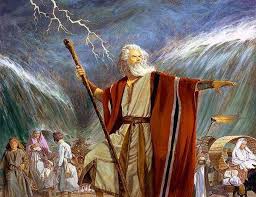
A perfect example is the children of Israel, who had been led out of slavery from the Egyptians by Moses through dozens of miracles, only to be stranded for 40 years in the wilderness as punishment. Why would God do this?
After the people were saved by God, rather than maintain their fidelity to God, they, in a series of important stories, instead went back to their Egyptian gods to worship because they were not ready to be fully committed to Moses’ new God. Knowing what lay ahead for Israel, it is not unjustified for God to make their circumstances so stark that they knew with perfect certainty that if they wanted God’s protection, they must be fully committed to their covenant with Him. A harsh world and culture needed a harsh God to convince the people of the importance of their covenant with God.
It is impossible for most of us to fathom the imminent destruction of everyone and everything we love for one moment in time, let alone every single day for centuries. So, when we also consider the purpose of those who were documenting these experiences with God, it is no surprise that God takes on a very harsh, warlike persona, because they had to rely on Him for protection in near-constant warlike conditions.
“Israel’s God is portrayed as fierce because Israel lived in a fierce world, and faith had to speak in those terms to survive.” – Walter Brueggemann
(Theology of the Old Testament)
This is why the Law of Moses is so important. It was the rituals and instructions that instilled values and principles that did not exist among the warring tribes and nations of the time. It emphasized sacrifice (firstlings of the flock), ritual submission, and doing good for others; it emphasized taking a day each week to not work, toil, and fight, but to worship and be with family. It emphasized honoring parents, fidelity to God, and honoring covenants even in the face of death.
When we view the Law of Moses, we sometimes only see causing death to animals and crude and harsh punishments for breaking covenants. We miss the beautiful principles that were not only different from those of all the other nations but also what signified the covenant with God, and those principles are still the foundation for our covenant relationship with God. Only we have the benefit of the Messiah coming, fulfilling the old covenant and bringing us a new covenant based on love.
“Teacher, which is the greatest commandment in the Law?” Jesus replied: “‘Love the Lord your God with all your heart and with all your soul and with all your mind. This is the first and greatest commandment. And the second is like it: ‘Love your neighbor as yourself. All the Law and the Prophets hang on these two commandments.” – Matthew 22:36-40
The Law meant the Torah; the Prophets, the rest of the Old Testament. So Jesus himself explained then that the purpose of the Old Testament hung on loving God and loving our neighbors. For Latter-day Saints, our unique view of Christ as the fulfillment of the Law of Moses and the importance we place on contrasts that teach us truth help us know that we can best understand God when we can see how He interacts with different people in different situations, and those contrasts help us see the beauty in covenants and our fidelity to them.
Legal and covenant texts are meant to shape behavior and provide the foundation for covenant expectations, not to provide a full portrait of God’s heart.
Conclusion – What Next?
I think this quote sums up how we should approach ancient scripture
“It is not God who changes across scripture, but the lens through which humanity comes to understand Him.” – Terryl Givens (Wrestling the Angel)
If we can approach ancient scripture in this way, we have a chance to see amazing stories, incredible examples of faith, and the power of covenants. Most importantly, we will see the principles that can help us today in our world full of different distractions and warlike conditions. It is still true that our covenant relationship with Jesus Christ will center us as we journey through this life, and because of that, we can have happiness and peace.
I genuinely look forward to studying the Old Testament this year, and some of my favorite stories and things I have learned in the posts for 2026.
Here are few resources to aid you in your study.
Old Testament Study Materials
The Jewish Study Bible
A gold-standard study Bible that presents the Old Testament (Tanakh) from the Jewish scholarly perspective, with extensive notes, essays, and contextual insights — invaluable for understanding ancient context and covenant themes.
The Hebrew Bible: A Contemporary Introduction
Comprehensive, accessible introductory textbook covering each book of the Old Testament with historical, literary, and theological background — ideal for serious study.
Introduction to the Old Testament (Arnold)
A respected academic introduction that blends textual, historical, and theological insights to help readers engage deeply with the Old Testament.
An Introduction to the Old Testament (Carr)
Another strong scholarly introduction offering clear explanations of the formation, content, and interpretation of the Old Testament.
The Lost Language of Symbolism – By Alonzo L. Gaskill, this book teaches how to recognize and interpret symbolism in scripture and temple contexts — a powerful aid for reading the Old Testament in its own symbolic world.
Highly Recommended Lost World Series (Walton)
These are excellent companions for deepening your study of the Old Testament’s cultural and ancient context. The series doesn’t push one definitive interpretation but helps you read scripture in its ancient Near Eastern context, unlocking interpretive clarity.
- The Lost World of Scripture: Ancient Literary Culture and Biblical Authority — A great starting point on how ancient texts were produced and transmitted, enhancing how you read all scripture.
- The Lost World of Genesis One — Explores Genesis 1 in its ancient cosmological context.
- The Lost World of Adam and Eve — Offers a perspective on humanity’s beginnings in Genesis 2–3.
- The Lost World of the Torah — Helps modern readers understand the Law as covenant and wisdom literature.
- The Lost World of the Prophets — Clarifies the prophetic books and their messages for ancient Israel.
ADDITIONAL RESOURCES
Podcasts
- Faith Matters Podcast: Encouraging faithful inquiry amid complexity.
- Comeback Podcast: Sharing Stories of those who left the church and came back.
- Unshaken with Jared Halverson: In-depth historical and doctrinal studies for those wrestling with tough questions.
- Leading Saints: Insights into modern leadership and discipleship, often addressing nuanced challenges.
Books
- Saints: The Story of the Church of Jesus Christ in the Latter Days (Vols. 1–2): Thorough Church history, incorporating modern research.
- Planted by Patrick Q. Mason: A compassionate approach to faith challenges.
- The Crucible of Doubt by Terryl and Fiona Givens: Thoughtful exploration of faith reconstruction.
- Joseph Smith: Rough Stone Rolling by Richard Lyman Bushman: A deeply researched biography reflecting Joseph’s certainty and complexity.
- Making Sense of the Doctrine and Covenants by Steven C. Harper: A summary of the history and context for each section of the Doctrine and Covenants.
Blogs and Articles
- Gospel Essays: Accessible discussions suited for individual and group study.
- Faith Matters: Engages contemporary faith topics with candor.

 Gospel Essays