
This week, I turned 45 years old, and I have spent the past month doing an annual ritual that I have done since I was 26. I spend a few weeks every year, leading up to my birthday, setting goals for the next year of my life. Turning 45 has made me look back more than in other years, and as I did, it was interesting to see how my life has evolved into what it is today.


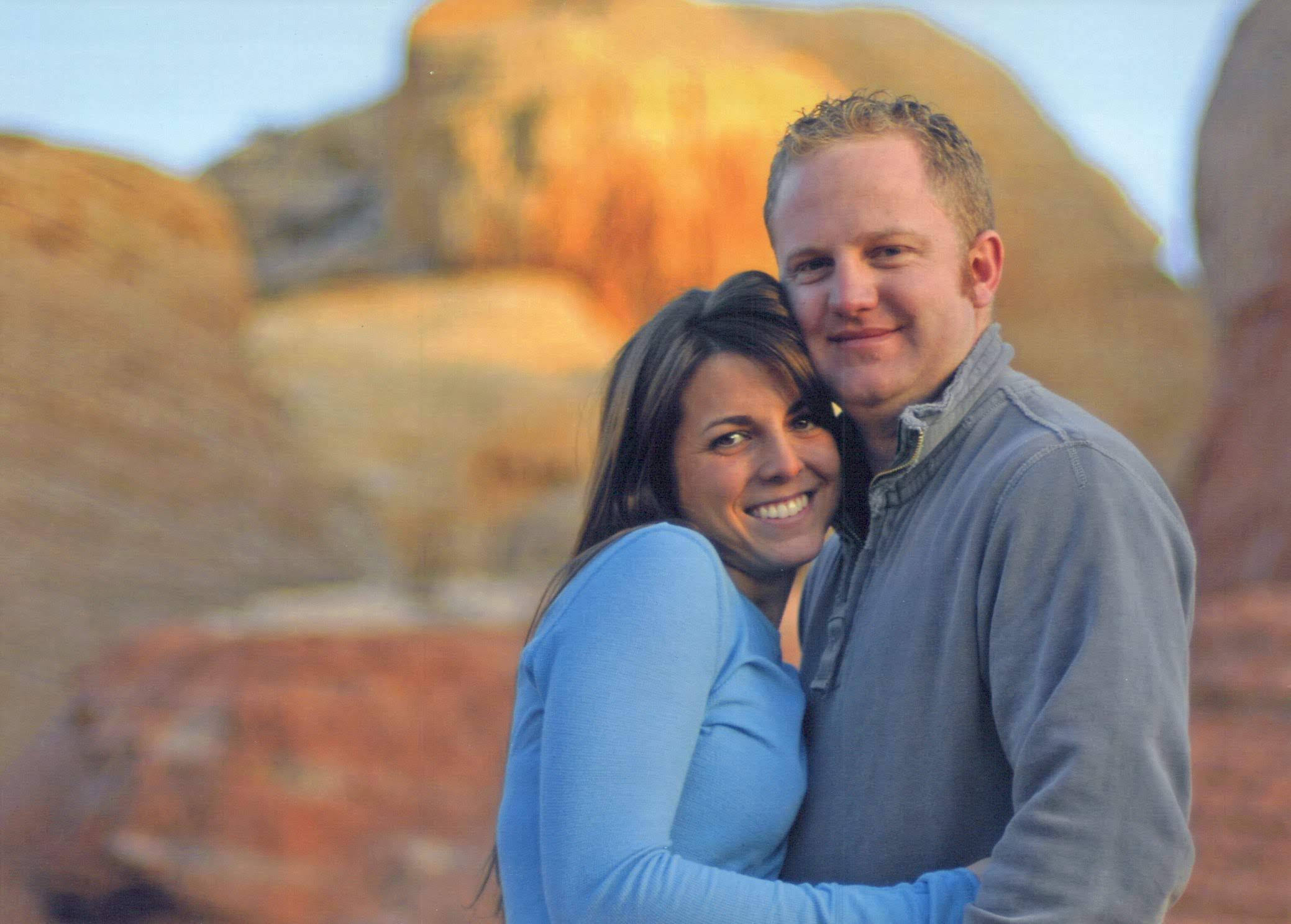
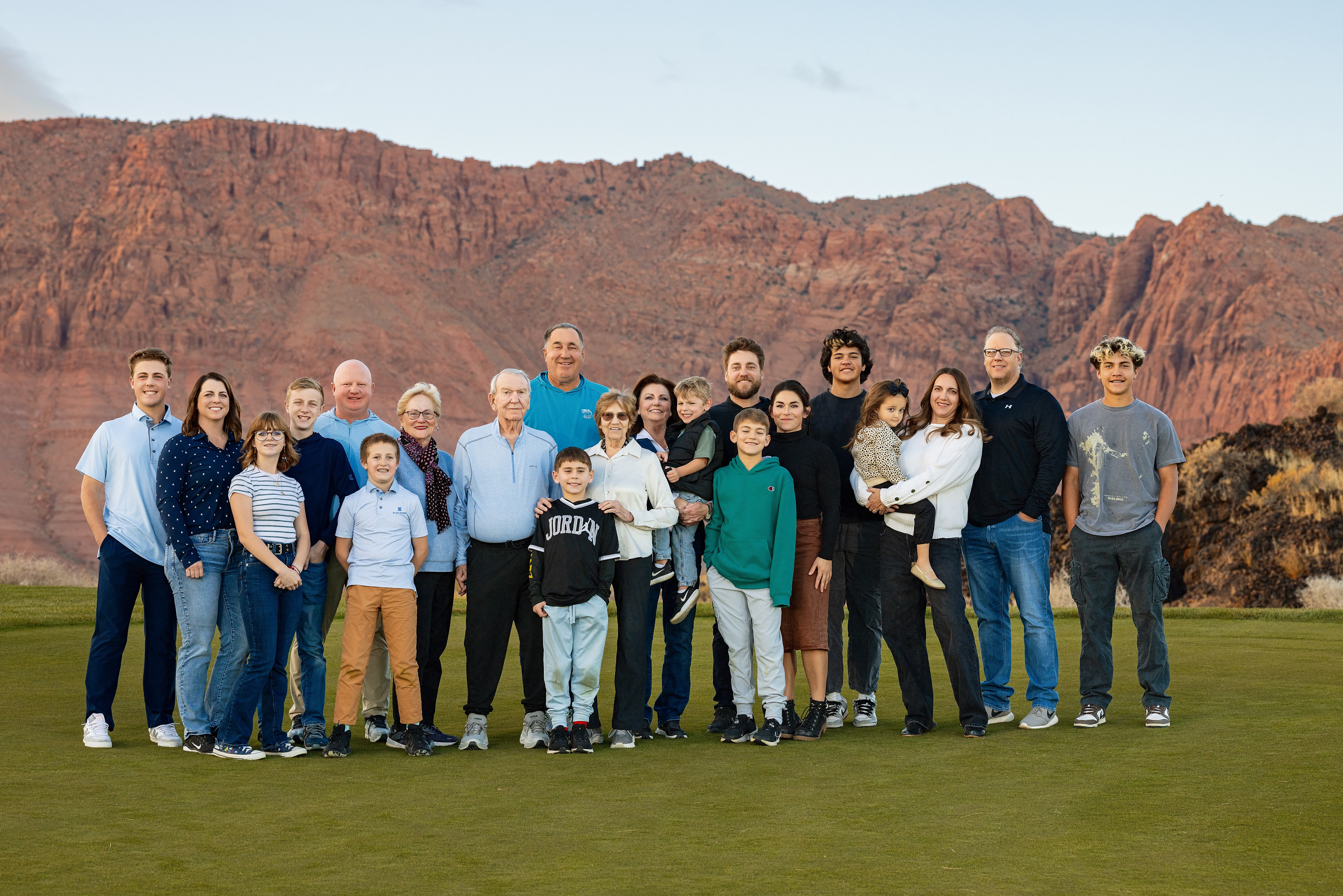
These photos represent a few important moments in my 45 years on earth—life as a happy and loved child, growing into a young man, fun on my mission, meeting Amelia, and starting a family. The last photo shows the culmination of what matters in my life so far—my family.
Whenever I take time to look back on my life, I am overwhelmed with gratitude for the people who have positively influenced it. I had parents, grandparents, even great-grandparents, aunts, uncles, cousins, friends, teachers, coaches, church leaders, coworkers, and others who influenced my life. I am also blown away by the sheer number of miracles, good fortune, and missed catastrophes that color my life. To be sure, my life has had challenges as well that have influenced me as well. It is sometimes hard to comprehend all the things that go into creating someone’s life, especially my own. I have an amazing life – great relationships, an immediate and extended family who loves to be together, a meaningful career, and a faith in Jesus Christ that gives me perspective through life’s challenges.
Approaching middle age is a challenge for most people. We start asking difficult questions about our lives: Why am I working so hard? What is the point of life? Am I a bad parent? Will my kids want to be a part of my life as they get older? What if I died tomorrow—what would my life mean?
When I started asking those kinds of questions a few years ago, they terrified me, and I struggled to make sense of my life, my purpose, and where I was putting my energy and efforts.
I eventually found solace and clarity when I felt inspired to document my life. I began writing down my experiences, spiritual ideas, life lessons, and any other things of importance for my kids and my posterity. This type of therapy has helped me in multiple ways. It has given me a place to process the experience I have gained from my life and those who have influenced me. It has allowed me to refine my perspective on the gospel and its real-life application, but more importantly, it has given me a medium to share ideas and feelings that otherwise might be left to wander in the corners of my mind.
As I thought about what to share in this month’s post, my mind kept coming back to a feeling that I should share some important lessons that have made the biggest impact on my life. A thought like that could lead down hundreds of roads, and the most difficult part was narrowing it down to a list of the appropriate size and also deciding how to frame the lessons. I settled on four key lessons framed as advice to my children with the hope that the lessons are useful to anyone who reads them.
Give it a Few Days
Do you see someone who speaks in haste? There is more hope for a fool than them.
Proverbs 29:20
It really isn’t that easy to be married to me. I travel over a hundred days per year, I work a lot, and when I am home I most likely still working in my mind. I am rarely available when Amelia needs me to help with logistics – this isn’t to say I don’t add value to our marriage or to the parenting of our kids – the point is I can make the day to day tasks of life pile up for Amelia and that can be frustrating.
Early on in our marriage she explained to a friend how she deals with this frustration and it was one of the most important lessons I have ever learned. She said, “I give it a few days to decide how frustrating what happened really was. If it is still frustrating, then I will bring it up with Jared and discuss it with less emotion. If it is not frustrating anymore, then I drop it forever and move on.”
While this lesson was specific to our marriage, it is a lesson that I believe is powerful for all relationships and challenges.
Emotions can cloud reality very easily, especially when we are tired, stressed, and feeling bad. This makes the negative things in our lives feel so much worse than they are.
We have all heard the phrase, “Nothing is as bad as it seems,” and it is probably so well known that it has lost its meaning, but it isn’t true because things are not bad. Specific circumstances, actions, and people are likely bad. What makes it true is that we need time to process the consequences and severity of the thing that is bad. With that time our most important superpower can be activated. Our ability to adapt, learn, and find solutions to the problems facing us.
Time also allows us to seek more understanding around the situations and many times that uncovers the most critical piece that erodes relationships – intentions. Intentions matter and when we are emotional we will often ascribe the worst of intentions to the situation. When we face a conflict with less emotion we get the chance to discover the actual intentions of those who have caused the bad things to happen.
I am an impulsive person, I debate to learn, I don’t like losing, and I am quick to take action. This means this lesson is difficult for me and I never would have learned it without someone like Amelia. She not only taught it to me in her words, but in her actions and I have benefited in hundreds of other situations in my life because of this lesson.
When things are bad…Give it a Few Days.
Don’t Wait For Tomorrow
Never tell your neighbors to wait until tomorrow if you can help them now.
Proverbs 3:28
This is the exact opposite lesson! Many times opposite concepts can both be true, but that is a lesson for another day.
In this case, let me explain.
When I was young we had lists. I don’t know about anyone else, but our lists were everyday. My lists looked like this:
- Vacuum the whole house
- Dust the whole house
- Windex the whole house
- Take out the garbage
- Do the Laundry
- Clean your Room
- Mow the Lawn
My sister and I did lists like this everyday. The pieces of paper and my mom’s handwriting are still imprinted in my mind.
The urgency and the responsibility to take care of the necessary things was ingrained into my life. It wasn’t just the lists. My parents were always the first to help when a neighbor needed a hand. We were always on time so as not to inconvenience others. My parents went to work everyday, almost never taking vacations or sick days. We practiced sports, we worked on skills, we did our homework. There were no exceptions.
My parents taught me something that I believe is the single most important principle that I have applied in my life. When something needs to be done – do it now and do it all the way.
For those that know me well it might seem like I favor this principle because of how it applies to my career, which it has made an enormous impact in that arena, but the reason I rank it as most important is because of how it has affected all the other facets of my life.
When I need someone’s forgiveness – I strive to resolve it now.
When I feel prompted by the spirit to send a text message that I love someone – I strive to do it right then.
When I feel like I need to teach my kids something – I find them and engage in the conversation then.
This doesn’t mean we shouldn’t take our time to plan, or think, or even let emotions pass, as today and now are meant to be somewhat relative. The lesson is not around minutes and seconds or even days, it is about prioritizing action over delay. If we commit to taking action and avoiding delay we will not have fewer problems, in fact, we may have more, but we will certainly solve more problems, experience growth that strengthens us, reconcile with those we love, enjoy those we love or things we like to do more, achieve more of our goals, find fulfillment in sacrificing for others and seeing them grow and succeed, discover new things, become more trusted, and most importantly experience more love.
All of us, when faced with a challenge or a responsibility that conflicts with a preferred activity, have the feeling of wanting to put it off. Save it for another time. We must make the commitment long before facing that conflict that we will do what needs to be done now and all the way.
Tomorrow is not promised to anyone and working on a goal, solving a problem, expressing love, seeking or giving forgiveness, enjoying the moment, crying and holding those we love, mentoring or helping someone in need, must be the focus of today, the here and now – Do Not Wait for Tomorrow.
Make the Best of Your Decisions
Thus, within our allotments we see how the saintly display kindness even within barbed-wire circumstances, yet others have barbed attitudes even within opulence. Meanwhile, the discontented continue to build their own pools of self-pity, some Olympic size.
Neal A. Maxwell
I find myself saying this phrase a lot lately. I think it is more important to make the best of our decisions than to make the best decisions.
This can easily sound like it is discounting the importance of making good decisions. That is not the point of this lesson. When I make this statement I am assuming that each of us wants to make good decisions. So, to make it clear, I am not saying it is better to make bad decisions than good ones.
What I have learned from my own lived experiences is that making decisions is hard, no one does it right every time. We will likely make more bad decisions than good ones in our lives, even if the choice seemed to be the obvious best choice at the time.
So the first step in this lesson is to accept the fact that we are unlikely to get it right most of the time. Almost every key decision we make will be accompanied by negative aspects or even unintended consequences. That is ok, in fact, it is part of the plan.
The critical challenge we must engage with in life is what do we do when faced with the consequences of our decisions. I use the term “owning up” to our choices all the time. We must own the responsibility for our own life circumstances, we must avoid the trap of fear and self-pity that can paralyze us and suck the joy from our lives.
Making the best of our decisions is something we can always strive for – this can mean changing course if necessary, this can mean making lemonade of lemons, this can mean being grateful for what we have instead of what we might have had – but mostly it means having a perspective that focuses on making the best of what you have instead of constantly regretting the decisions of yesterday or wishing you had something else.
Accepting that you will not make all the right decisions, and that even good decisions will still bring difficulty into your life begins the process. Choosing to see the world from the lens of hope and optimism will help you keep going, but the key to feeling at peace with yourself and your life is to commit to…Making the Best of Your Decisions.
Our Environment is One Thing We Must Control
Do not be deceived: “Evil company corrupts good habits”
1 Corinthians 15:33
I am fortunate to have a circle of friends, co-workers, and family members that make my life better. They make me better. Some of those people I did not get to choose, but when I look at my 45 years, the thing that had the biggest impact on my life was my environment. The communities that I belong to.
We don’t really get to pick our parents and siblings, but every single other community we belong to is our choice to make. This use to be a lot easier, people lived in the same town their whole lives, they worked in the same places, they read the local newspaper, and they spent time together in person. Now, the world is coming at us from every angle. Thousands of communities can be a part of our life in seconds. Algorithms and predictive AI know more about us than we know about ourselves and they use that information to steer and move us in ways that we may not even notice.
Paul was pretty straightforward in the verse above when he said, in my words, “Don’t kid yourselves. If you hang out with idiots you will become one.” We must make a conscious decision to choose the communities and then environments we will spend our lives in. We must choose who our friends are, who we marry, where we work, which communities we give ourselves to. These choices are the most important choices we make.
So how do we choose? What is the criteria?
My observations over my life have led me to a single conclusion. The communities that produce people who are the most happy, helpful, stable, and productive come from communities that encourage religious practice, belief in God, and service to our neighbors. This certainly does not mean that happy, helpful, stable and productive people are exclusively religious, or that religious people are all happy, helpful, stable and productive. What it doe mean is that the religious communities are built to foster those qualities and engaging in that environment over time will likely produce the best friends, the best family relationships, great networks for jobs and careers, opportunities to serve others and grow.
Whether we choose a religious environment or not, we must be thoughtful and intentional when choosing who we spend our time with. We must not let outside forces and others deceive us or move us away from the communities that will help us become our best selves. Our Environment is the One Thing We Must Control.
We all have lessons worth sharing, we all have experiences that can impact others. If there is one other advice I can give going into my 46th year, it is to share your stories. Share your advice to your family, to your friends. We all need help and sometimes we learn a lot just from sharing ourselves with others.
ADDITIONAL RESOURCES
Podcasts
- Faith Matters Podcast: Encouraging faithful inquiry amid complexity.
- Comeback Podcast: Sharing Stories of those who left the church and came back.
- Unshaken with Jared Halverson: In-depth historical and doctrinal studies for those wrestling with tough questions.
- Leading Saints: Insights into modern leadership and discipleship, often addressing nuanced challenges.
Books
- Saints: The Story of the Church of Jesus Christ in the Latter Days (Vols. 1–2): Thorough Church history, incorporating modern research.
- Planted by Patrick Q. Mason: A compassionate approach to faith challenges.
- The Crucible of Doubt by Terryl and Fiona Givens: Thoughtful exploration of faith reconstruction.
- Joseph Smith: Rough Stone Rolling by Richard Lyman Bushman: A deeply researched biography reflecting Joseph’s certainty and complexity.
- Making Sense of the Doctrine and Covenants by Steven C. Harper: A summary of the history and context for each section of the Doctrine and Covenants.
Blogs and Articles
- Gospel Essays: Accessible discussions suited for individual and group study.
- Faith Matters: Engages contemporary faith topics with candor.

 Gospel Essays