
This year is the 20th anniversary of when we started our company. We recently had a celebration with our employees and it was fun to give a presentation and tell some funny stories of the beginnings. During the presentation, I talked about some of the things that helped us succeed through so many different challenges over the years – principles like taking one step at a time and being optimistic even when facing the realities of hard things. Those concepts have been a key for us over the years, but there was another defining concept of our company’s 20 years that wasn’t necessarily a focus for that meeting that I want to share here and relates to the broader message of this post.
In section 6 of the Doctrine and Covenants the Lord says something to Oliver Cowdery and Joseph Smith that had a strong impact on me as a missionary and has been the basis of how I have tried to live my life since then.
“Fear not to do good, my sons, for whatsoever ye sow, that shall ye also reap; therefore, if ye sow good ye shall also reap good for your reward.”
D&C 6:33
Starting up a business and then growing it over time is not an easy task, and an impossible number of things have had to go our way over the years to get to where we are now. A key concept that has always been at the foundation of our approach to business is to do good things and do the right things and believe that good and right things will happen to us in return, sometimes even miraculously. For me at least, this doesn’t mean that the good that happens to us is making a lot of money or that every project succeeds – that isn’t something I believe. For me it does mean that opportunities, people, unique solutions, and tender mercies have come our way countless times over the past 20 years. As we have made it a primary mission of our group to try to do the right thing and try to do good for our employees, partners, the community and each other it feels as though it has always come back to us in more abundance.
So, what does this have to do with my post this week? When I look at the formation of the early church, I see a startup in many ways. This was a group of people who had no idea how to start a church let alone a transformative movement. There has been 200 years worth of overcoming impossible odds, improbable challenges, catastrophic persecution, modern religious malaise, and yet, what they have created fulfilled Joseph Smith’s prediction:
“It is only a little handful of Priesthood you see here tonight, but this Church will fill North and South America—it will fill the world.”
Joseph Smith 1834
When the Lord encouraged Joseph and Oliver to do good things, he started by saying “Fear Not to Do Good,” which is different than only saying, “you reap what you sow.” The majority of times I have heard “you reap what you sow” in my life has been as a warning or in a “I-told-you-so” kind of focus on the negative consequences of doing bad things. In this instance the Lord is instead emphasizing the mental approach to doing good and that continuing to good will lead eventually to good things.
Since I was first exposed to some of the more difficult parts of church history a few decades ago I have spent thousands of hours studying and learning. I have come to love history, and learning about interesting people, but I am also quick to admit that historical people are complex just like each of us is complex. In a recent interview, Malcolm Gladwell talks about looking at historical people in layers. He uses the example of the founders of America. In our postmodern society, especially among younger generations, it is a very hot take to ignore their greatness, because they were a bunch of bigoted white guys which leads some to the conclusion that America as whole has somehow become not as great because of these negative aspects of their character.
Gladwell makes the assertion that all people should be viewed in layers rather than absolutes. The first layer might be that these founders were insanely brave, courageous, intelligent and their experiment to create the first large scale democracy changed the entire world for the better. The second layer is that they were 18th Century products with all the biases and belief systems of the time. The third layer they were successful people working within the societal framework available to them at the time. The fourth layer is that they were human beings, with all the good and bad that comes with those biases, including not valuing women and other races the way we do today. These are just four layers and imagine if someone evaluated your life with a microscope on each layer 200 years later, then imagine it with third party accounts, incomplete information, and the biases of the modern times.
When we focus too much on just one layer, whether good or bad, it can distract us from seeing these people and the fruits of their efforts in a way that can impact our lives. Looking at human beings in terms of layers, is not meant to lessen negative aspects of historical figures lives, but more importantly a way to introduce patience and grace when examining their lives so we have perspective on what we perceive to be negative through our modern lens, but also appreciation and understanding of their achievements and greatness. In the context of the early church history, if we do not approach these people as real people it can prevent us from truly seeing how they took the admonition to do good and really created something that has changed the world for the positive.
Broader American History
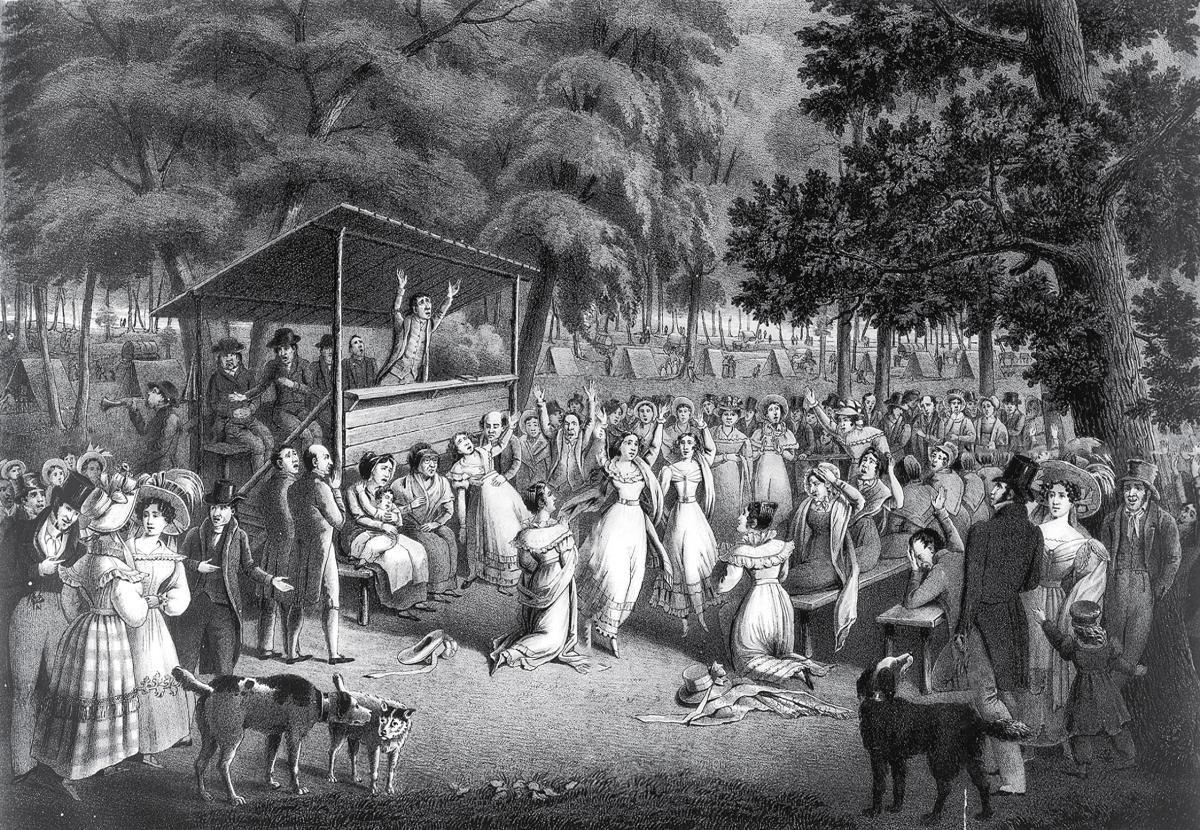
For over 50 years leading up to the events of early Church History, America had been in a near constant state of war. Almost all available focus was on securing or protecting freedom for the citizens of America. At the center of those freedoms was religion. Unlike almost every country that was founded or conquered before, in America the foundational premise was radical freedoms including religious freedom. This first-time-in-history recipe of dealing with the emotional ravages of war and the opportunity and chaos that came with radical religious freedom created what historians now call the “Second Great Awakening.” This era was marked by competing denominations, passionate sermons, and countless people renewing or beginning for the first time to to seek truth in a landscape of doctrinal confusion. Young Joseph Smith stepped into this world of vibrant spiritual activity—and of uncertainty and contention—to seek answers for himself. The conditions for something completely new when it came to Christianity were even more ripe in where they lived, in what was called the “Burned-over District” of western New York that was called that because the preaching and searching for God was was almost overwhelming.
From the time Joseph Smith had his first vision in 1820 through the time when the Book of Mormon was published in 1829, many critical moments in the foundation of the church’s history happen. As I have studied and pondered over these early moments I have concluded that it is critical to really understand and consider the actual people who brought about the Church of Jesus Christ of Latter-day Saints. The focus is often on Joseph Smith, and for good reason, as is his life is full of things to examine. The foundations and the real defining moments of the restoration involve other people as well. Most of them are mentioned or are the focus of the 17 sections of the Doctrine and Covenants we have studied so far this year. Their stories, their motivations, and their actions and testimonies are incredibly compelling and meaningful, yet often an afterthought. I want to take a little time to highlight some things about them and hope you will consider learning more about them as their witnesses to these foundational moments of the restoration have strengthened my faith.
Lucy Mack and Joseph Smith Sr.
Lucy Mack Smith was a devout follower of Christianity. She was always committed to religion and she was focused and organized as a mother. She desired nothing more than for her family to be together and happy. She was loving and patient, but wasn’t afraid to make her feelings known as Joseph Sr. struggled financially and with his commitment to religion. She was the glue that kept the family together.
While Lucy Mack Smith had always been engaged in churches and religion, Joseph Sr. was skeptical of institutions of religion, but was a believer in a higher power and very spiritual. He was definitely a man of our times in that regard. He rarely attended church and felt content to sit at the margins, but was certain there was something better out there. They were nearly always living in poverty and were seen as outcasts by those who frequented and led the congregations of their area. They didn’t fit in and he was particularly skeptical of whether they should.
In 1811, Joseph Sr. had a vision that confirmed his feelings in which he saw many different beasts and animals tearing up the land and accomplishing nothing and he felt this defined the religonists of the day. Years later when Joseph Jr. began receiving revelations and building a movement of restoration, it spoke to Joseph Sr.’s heart. Unfortunately he felt at this point he had failed at almost everything he had tried, he was beset by alcoholism and had never really been committed to any religion and so he worried about his place in the movement. In section 4 of the D&C the Lord invites him to be committed and help bring the restored gospel to the world. He also lets him know he will be welcomed into the fold.
Joseph Smith Jr. benefited greatly from his two parents. They had the unique blend of being outsiders who believed but were looking for something different and new. The idea of revelations and visions were something to be accepted and believed, and creating something that tied their family together for eternity was of critical importance. This fostered an environment where changing the status quo and a belief that God would bring something new to the world through them would be cultivated and supported.
Hyrum Smith
Hyrum is often seen as a sidekick, or fades into the background of the way we tell the story and it may feel as though he had very little impact on the early church. This is clearly not the case and as you search deeper what you find is a rock of a man with whom Joseph Smith relied on every step of his journey. From the beginning Hyrum is there supporting and helping Joseph. When Joseph’s leg was infected and nearly amputated, Hyrum, still a young boy himself, held Joseph’s leg and Joseph to comfort him and help him deal with the pain. I picture this moment in my mind and it brings a tear to my eye to think of the brotherly love that Hyrum had for Joseph.
“I love my brother Joseph with all my heart. I have been with him in every time of trouble, and I shall be with him to the end.” Hyrum Smith
When the Lord speaks to Hyrum in Section 11, he counsels Hyrum to seek to obtain his word and seek wisdom. Hyrum wanted to be doing more and helping more visibly, but his role was to be the wise one, the solid partner behind the scenes helping to move things along and a calming foundation in the coming storm. Hyrum did this for Joseph and for many others of his time all the way until being there with Joseph at their deaths. His greatest impact cam through his wonderful wife Mary Fielding and their posterity. They became the foundation for the church as it grew throughout the next 100 years with multiple apostles and presidents of the church coming through their lineage.
Emma Smith
Perhaps no one suffered more and went through more for the cause of the restoration than Emma. Enduring condemnation from her family for marrying Joseph, multiple deaths of children at young ages, near constant threat of death or imprisonment of her husband, losing everything financially, and moving long distances four times. Then add in the embarrassment and frustration she felt toward plural marriage, the strain in her relationships with other leaders of the church and the feelings of longing and hoping for more connection to Joseph when in reality his whole life was to be given to the building of the church eventually giving it all in his death. It is hard to imagine how she felt or how she endured it all, yet during the worst of her moments she expressed, “I never expected to be so happy as I am now.”
She is just an incredible example of faith and conviction despite all odds. She stood by the fact that Joseph Smith was indeed a prophet and that the experiences of the restoration, particularly those of these early sections we are studying were realities. Later in her life, decades after the Saints moved to Utah, she gave many interviews to her son and others. Her testimony of the translation of the Book of Mormon stood out to me the most:
“When acting as his scribe he would dictate to me hour after hour, and when returning after meals or after interruptions, he could at once begin where he had left off, without either seeing the mss [manuscript] of having any portion of it read to him. This was a usual thing for him to do. It would have been improbable that a learned man could do this, and for so ignorant and unlearned as he was it was simply impossible.”
Emma Smith
The Three Witnesses
Oliver Cowdery
Oliver Cowdery was a schoolteacher by profession and became interested when he heard the story of the plates in Manchester, New York from David Whitmer and others. He had been seeking for something new, like many in the area, and began to pray and search for something to point him in the right direction. Eventually he became Joseph Smith’s primary scribe during the translation of the Book of Mormon and in these early sections we are introduced to some personal moments. During the time when Oliver was trying to find out whether Joseph’s claims were true Oliver had a spiritual experience that is brought to the forefront in Section 6, where the Lord through Joseph Smith reminds Oliver of a time when the Lord spoke peace to his mind and this was overwhelming to Oliver as he had told no one of the experience. This was the catalyst to Oliver’s commitment. The intensity of the roughly 100 days in which the Book of Mormon was produced effected Oliver his entire life, but without his ability to write properly it would have been even more difficult to translate the Book of Mormon as Joseph was only dictating and was not capable of writing or spelling. At the end of this period of time Oliver was one of the three witnesses to the Angel Moroni and the Gold Plates.
“These were days never to be forgotten—to sit under the sound of a voice dictated by the inspiration of heaven, awakened the utmost gratitude of this bosom! Day after day I continued, uninterrupted, to write from his mouth, as he translated… the history, or record, called ‘The Book of Mormon.’”
Oliver Cowdery
David Whitmer
David Whitmer and Oliver Cowdery were friends and began their investigation into Joseph’s claims together. While Oliver was a scribe, David and his family protected and sheltered Joseph and Emma during these early years. Without their help it would have been nearly impossible for the church to flourish and grow. David is most famously known for his decades worth of interviews after he left the church testifying of the truth of the Book of Mormon and their angelic manifestations.
“No, sir! I was not under any hallucination, nor was I deceived! I saw with these eyes and I heard with these ears! I know whereof I speak!”
David Whitmer
Martin Harris
I saved Martin Harris for last as he, in my opinion, is the most relatable of the witnesses. He had by far the most to lose, was a very successful and prominent member of the community. His wife was against his involvement almost from the beginning and he experienced the most amount of doubt and skepticism of the three witnesses. There are three distinct experiences I want to relay about Martin –
- The Lost 116 Pages – After Martin’s wife had become skeptical of Joseph Smith in early 1828 Martin asked if he could show his wife the pages of the Book of Mormon that had been produced so far. The Lord had warned Joseph Smith of this being a mistake but Joseph gave them to Martin and of course they were lost. This experience created conflict between Joseph and Martin and Martin’s wife. In Section 10 it is revealed that the Lord had prepared for this eventuality within the structure of the Book of Mormon. Because there were two records of the Nephites – an abridgment of the Book of Mormon by Mormon, and the actual writings of Lehi and his descendants. This coincidence could be explained away as a clever ploy by Joseph Smith, but it was months later in the translation process that it even came to light as the books of 1 Nephi and 2 Nephi were the very last part of the translation process. When Martin discovered this at the end his was relieved and astonished.
- Scholarly Validation – Months after the lost 116 pages, Martin’s wife was so skeptical that she was unwilling to allow Martin to give financial support to the publishing of the Book of Mormon without some sort of scholarly validation. Joseph wrote some of the characters from the plates for Martin to take to a scholar for validation. After visiting multiple scholars, Martin became convinced that the characters were legitimate. After the scholars found out the source of the characters were from an angel they refused to admit their validation. As I put myself in Martin’s shoes, whatever the scholars said to Martin convinced him they were real and so Martin and his wife agreed to finance the publication of the Book of Mormon.
- Doubt and Conflict – Martin’s life was full of turmoil, he had evidences that Joseph was a prophet, that the Book of Mormon was real, but his wife was rightfully skeptical of mortgaging their entire farm for the publishing of the Book of Mormon. Joseph needed Martin’s help and Martin was tired and was struggling. In Section 17, the Lord informed Joseph Smith that there would be witnesses to, what up until this point had only been experienced by Joseph, an angelic experience and a tangible investigation of the plates and the other ancient artifacts. Martin, feeling the weight of his failures, doubt, and conflict at home and financially, did not believe he could see such a thing. Eventually he feels the comfort and forgiveness he desires and is then witness to one of the most important experiences in recorded history.
“Do I believe it! Do you see the sun shining! Just as surely as the sun is shining on us and gives us light, and the moon and stars give us light by night, just as surely as the breath of life sustains us, so surely do I know that Joseph Smith was a true prophet of God, chosen of God to open the last dispensation of the fullness of times; so surely do I know that the Book of Mormon was divinely translated. I saw the plates; I saw the Angel; I heard the voice of God. I know that the Book of Mormon is true and that Joseph Smith was a true prophet of God. I might as well doubt my own existence as to doubt the divine authenticity of the Book of Mormon or the divine calling of Joseph Smith.”
Martin Harris
While we will discuss the reasons for their estrangement from the church in later posts this year, it is a critical and undeniable fact that these people suffered all of the most difficult things that could test faith – betrayal, death, financial loss, estrangement, and conflict. Yet each and every one of them stood by their faith, their witnesses, the miracles they experienced and the events that created the foundation for the Church. They feared not to do good and trusted that the seeds they were sowing would reap fruits that were amazing.
So the question I have had on my mind lately is – Why do we even need a church? What is the real value of what these amazing people sacrificed to build and preserve?
Increased Success at Generational Happiness
“Happiness is the object and design of our existence; and will be the end thereof, if we pursue the path that leads to it” – Joseph Smith
My answer to the questions is that engaging with the Church is the best way to insure generational happiness. Joseph Smith’s quote above points to that as the purpose of the church. The gospel plan is called the “Great Plan of Happiness,” and multiple times in the scriptures the people living the gospel were either living “after the manner of happiness” or called the happiest people that ever lived. Those are all clear indicators that the purpose of the gospel – and the Church as its vehicle – is meant to be generational happiness. Statistical trends are also showing that those who are actively engaged in religion are happier than on average and those who are unaffiliated with religion have higher percentages of loneliness, depression and angst.
If this is true then why does it feel like more and more people unhappy or dissatisfied religion, and many people give up on religion and church completely? and also what does this have to do with the title of the post “Fear Not to Do Good?”
I love science and research, so lets start there first and examine if or why my theory may be true. To be clear, my theory is not that the happiest people are members of the church, or that the only way to be happy is to be religious, or even that for an individual the church is the best path to happiness. My theory is that the Church creates the best chance for Increased Success at Generational Happiness.
According to most of my research on happiness and the science behind it there are three primary conditions that promote the highest chance of happiness – Strong Relationships (Belonging), Self-Improvement and Sense of Meaning (Purpose), and Self-Determination and Autonomy (Agency). There are plenty of studies on this topic and I read through a dozen or so, but most of them all came back to these three conditions.
A few important notes to make about happiness. Happiness does not mean we don’t experience all the other emotions of life – anger, sadness, stress, and others – it means we have certain conditions in our life that help us experience those in ways that allow us to be happy more often and despite the very difficult circumstances of life. Study after study confirmed that financial, marital, gender, race, or geography had very little to do with lasting happiness.
Let’s take a step by step approach to examine each condition separately before bringing it together.
Strong Relationships and Belonging
The research is clear that when people feel they have strong relationships and a sense of belonging they are more likely to be happy, even when things are difficult. This concept likely brings to mind the most obvious focal points on how the church is effective in that concept because of the focus on marriages and families. Family is the very center of our doctrinal teachings and the idea that our family relationships last for eternity is at the core of how we approach the world.
The church is not just focusing on our family relationships in our mortal life, but in a growing and expanding connection to our family members who have passed away. There is no organization on earth investing more resources into the discovery and connection of past generations than the church. If these two things were the only things the church emphasized to create strong relationships and a sense of belonging it would probably still be at the top of all organizations in the world in cultivating those conditions.
“See, I will send the prophet Elijah to you before that great and dreadful day of the Lord comes. He will turn the hearts of the parents to their children, and the hearts of the children to their parents..”
Malachi 4:5-6
I am not sure that the focus on the family is the most valuable part of the church in creating strong relationships and belonging. I think one of the best things about the church is it’s culture in building strong relationships and belonging in the communities we live. Now, I know firsthand some of the negative aspects of what we call church culture and I will discuss that, but I’d like to discuss what I believe defines a strong relationship and belonging.
When you think about who your closest and most important relationships are, whether family or friends, what kinds of things define your relationships? Here are some words that came to mind as I thought through my list – sacrifice, forgiveness, going through challenges together, having patience with their or your weaknesses, laughter, making positive impacts together, kindness, holding each other accountable, seeking whats best for each other. I am sure you may have other things on your list, but what I realized in looking at my own list is that the relationships that have the most impact on me are not always just people who are exactly like me, its more about what we experience together and the things we do to bring each other closer when dealing with difficulties.
Church culture, even with some of its weird and harmful traditions, is mostly defined by organizing a group of people who live in a geographical boundary and asking them to volunteer to run the church together. This feels like an insanely bad idea that could lead to chaos and all kinds of problems (which is sometimes true). Instead, it most often works in bringing people who are different together in an environment built to serve and help each other, sometimes with great sacrifice. This structure largely produces people who are committed to doing good things for others, even those they may not every normally associate with, and there is no other group of people in the world that do this the way we do.
About two years after we moved back to Utah, we moved into a ward in Cedar Hills. I had been nervous about moving back to Utah County and the “self-righteous” culture would make me feel uncomfortable and I would not fit in. Shortly, after moving into the ward I was called to be the Teacher’s Quorum Advisor with the responsibility to teach on Sundays. I was very excited, and saw an opportunity to help these young men be prepared to handle some of the difficult things I had recently dealt with about church history, culture, missions and so forth. I felt inspired to make a difference.
Only a few months later, after a parent complained to the bishop about what I was teaching, I was released. It was pretty devastating to me. It hurt more than I can tell, and I have such empathy for people who don’t feel they fit into the church, because I completely disengaged after that. I had a convenient excuse, as our first born was very young, and so I would just leave after Sacrament meeting and take him home. I really struggled for a few years on how to deal with my feelings. It actually made me even more certain that I could never fit in, and I developed my own “self-righteous” attitude toward “the church” during this time.
In 2010, we moved into a small condo, and into a new ward. I knew some people in the ward and that was beneficial as it gave me a small hope that we could fit in, but I was still incredibly jaded. Then something life-altering happened to me. I was called to be the Elders Quorum President. After the call was issued I asked for some time to think about it because I was very worried it would go badly for everyone, but mostly me. I relayed the story about being released as the Teachers Quorum Advisor to the bishop and asked if he would have my back and let me be myself if I accepted. He agreed and so I jumped into the calling trying to make a difference.
Early on, I was a bit to aggressive in my goal of changing the people int he ward to see things my way. I was viewed with skepticism and probably more than a few rolled-eyes. One night, when I was struggling with the situation and my feelings of resentment and frustration, something changed for me. I felt the spirit tell me that I would be ok and that these people were good people, doing their very best to serve and help as well. I needed to understand and love them if I was going to make a difference.
After that I saw church culture differently, in layers as Malcolm Gladwell states, and I experienced some of the most amazing miracles in that ward. We had over forty widowed or divorced single sisters move into our ward, they all needed help, some didn’t want help even if they needed it, but our ward united around each other, served, loved and made a difference. I made bonds and relationships in that ward that changed me, and I like to think that I had the same effect on a few. As I look back, I am not sure there is ANY other organization in the world that would create those conditions (which I believe happen in thousands of wards around the world every day) where there was a commitment to serving, helping, loving, and growing with people who are so different than yourself.
Not every part of the church culture is valuable, and some of it is harmful and needs to change, but what I have realized is that most of it is meant to help us build strong relationships that make us better, and make others better, and the only way to change some of the harmful stuff is for each of us to engage in it and bring our unique voice and hearts to the church.
Self-Improvement and Purpose
The next thing the research suggests is that when people have a purpose or meaning to commit their lives to, it produces higher levels of happiness. Even more important was coupling that purpose or meaning with a commitment to personal improvement. The combination of purpose and meaning with self-improvement led people to report even higher levels of happiness and satisfaction.
This one also made a lot of sense to me as I thought about experiences in my own life. When people have a reason to overcome the difficulties and hardship of life, a reason to motivate themselves, and can see their progress and accomplishment, it seems obvious that they will be happier. An added benefit to this concept is that while I am sure there are instances where purpose or meaning are individual in nature, the vast majority of purposes that create a sense of meaning seem to be achieved through group efforts.
Whether a purpose is for societal improvements, charitable causes, winning as part of a team, or succeeding in the business world, meaning and purpose often are important parts of happy groups of people. The purposes create a driving force for their lives, but their ability to achieve their purpose relies on the groups ability to encourage individual progress and improvement.
Athletic teams use practice both as a team and individual to improve not only each individual team member, but the cohesion and unity of the team functions as well. This effort to improve and grow is what allows them to work in harmony to succeed in their purposes.
Businesses create their strategy, their purpose and then set about to train and mentor their teams. The teams then get to work, learning from mistakes, adjusting strategy and continue to improve and grow which leads them on the path to success.
Societal and charitable causes must also educate, train, and learn ways to change minds, convince people, governments, and organizations to join and bring their resources to the causes. The goals of those organizations are to make a difference and without the individual people focused on learning, changing and growing they will be less likely to succeed.
When the Lord told Joseph and Oliver, “Fear Not to Do Good” he continued for many sections giving instruction and asking these newly ordained disciples to change and grow and encourage others to change and grow. The purpose of the church in this context is simple – to do good for ourselves, for our families, for our sphere of influence and then for as many people as we can. This is an incredibly useful purpose and with it comes a very effective structure for accomplishing that purpose – ward and stake callings, missionary program, educational programs, humanitarian aid, and many others make up this institutional structure. That structure would not be worth very much if not for the most important part – members of the church who are committed to do good in the world.
The framework of the church – belief systems, structures, and leadership – is effective in creating so many purpose driven people because at the core of the church is Jesus Christ. We have a focal point in Jesus that provides an example of what our purpose should be – doing good for others. He also acts as the source of grace and mercy in our lives so that we can engage in the process of self-improvement (repentance) with confidence we are loved, supported, and that even if we don’t succeed He will make up the rest. So many people in this world do not value self-improvement and growth – this is a missed opportunity for happiness and satisfaction – but as members of the church we have the fortune of our self-improvement being tied directly to hope and peace that even if we don’t improve that much it is still going to be fine.
It is very easy to get annoyed and rebel against the perception that “the church” is trying to control our lives with rules and commandments (sometimes they are), but that perception often distracts us from the plain reality that a framework that focuses our faith on changing and growing, with an example and companion in Jesus Christ does have the power to create people who do more good in the world and that brings happiness in larger quantities to those people and themselves.
Self-Determination and Agency
The feeling that we can be our true and authentic selves is a powerful ingredient in happiness. Whenever we feel like we are trapped, we can’t be ourselves, or we are being duplicitous in our actions it creates dissonance and unhappiness. Since the advent of social media, the concept of authenticity and living “your truth” has gained momentum. This cultural phenomenon is largely built around the general angst that individuals feel when their ideas, feelings, and desires don’t match up with the groups they are affiliated with. I want to point out something very important about this – It is my belief that every single member of any group feels this way on some level. It is impossible for groups to completely match up with every aspect of our individual personalities throughout our lives.
In the Mormon world, we like to describe the principal of autonomy and self-determination as agency. In Latter-day Saint theology, the war in heaven was fought to preserve agency, and Jesus Christ’s sacrifice was for the express purpose of making our agency ours to control. On the flip side, feeling empowered to exercise our agency can be the cause of rejecting the church or its teachings. Often this rejection is because it feels as though certain parts of our individual authenticity are misaligned from the church whether because of the culture or teachings. It can feel better to seek groups where those parts of our selves are the same as others.
The flight from religion over the past few generations is primarily a result of motivation of individuals to seek communities where they feel they will fit in better. In past generations moving on to other communities was more difficult because communities and groups were often bound geographically and it wasn’t super easy for people to leave their lives behind. Now, with the advent of social media and the internet, leaving one community for another is as easy as clicking unfollow or follow on our phones.
The ease in which we can leave or join a community and the myriad of options available seems like it should be a recipe for happiness to increase as people can find “their people” more easily. Unfortunately, the opposite is true. Happiness levels, particularly in the generation of people whose communities are largely found online and who have rejected religion generally, have plummeted. While there are many theories around this, I would highly recommend taking 8 minutes and watching this video. Pete Davis calls the last few generations, “the infinite browsing” generations and that the comfort of feeling like we have options has replaced the happiness of being committed to things for the long haul.
So even though feeling autonomy and having choices in our life decisions can be a key aspect of happiness, agency that produces long term happiness above temporary comfort requires utilizing that choice to commit to groups and purposes that also increase happiness.
So what if we aren’t sure we fit into the church, or feel important parts of us are not aligned with the church?
I am often feeling that most of the problems we face today are just enhanced versions of problems others have faced in the past. This particular problem of individuals and their personalities, beliefs and traditions not fitting in with a church or religion are not unique. When the Apostle Paul set out to expand the footprint of Christianity he faced some of his most difficult challenges from within. The Jewish foundation of the church was making life very difficult for all the Gentiles, Romans and Slaves that were flocking to the message of Jesus Christ. They most certainly DID NOT fit in and it was causing all kinds of problems.
In what I believe is one of the most important sermons of the New Testament Paul says:
Just as a body…has many parts, but all its many parts form one body, so it is with Christ. For we were all baptized by one Spirit so as to form one body—whether Jews or Gentiles, slave or free—and we were all given the one Spirit to drink. Even so the body is not made up of one part but of many.
Now if the foot should say, “Because I am not a hand, I do not belong to the body,” it would not for that reason stop being part of the body. And if the ear should say, “Because I am not an eye, I do not belong to the body,” it would not for that reason stop being part of the body. If the whole body were an eye, where would the sense of hearing be? If the whole body were an ear, where would the sense of smell be? But in fact God has placed the parts in the body, every one of them, just as he wanted them to be. If they were all one part, where would the body be? As it is, there are many parts, but one body.
The eye cannot say to the hand, “I don’t need you!” And the head cannot say to the feet, “I don’t need you!” On the contrary, those parts of the body that seem to be weaker are indispensable, and the parts that we think are less honorable we treat with special honor…so that there should be no division in the body, but that its parts should have equal concern for each other. If one part suffers, every part suffers with it; if one part is honored, every part rejoices with it.
Now you are the body of Christ, and each one of you is a part of it.
1 Corinthians 12:12-27
Paul felt, and I do as well, that our authentic selves are best used as an active agent in bringing uniqueness to groups as an additive contribution, with a willingness to learn and accept others as their unique personalities as well. The most successful, happy, and meaningful groups in history are almost always made up of very different individuals who become connected and aligned while bringing their individual traits to the group. Jesus Christ’s chosen apostles were incredibly different. They would have never joined a group together of their own choice, yet they as a group may have changed the world for the better than almost any group in history, providing a vehicle for doing good and producing happiness for billions of people.
To those struggling to find a place in the church, or for those in the church seeing those struggles. Let’s engage with each other and learn from each other. We can all do better, and we all have so much to learn from each other. I am confident good can be done and increased happiness found by engaging and learning from each other, much more so than only seeking to be around those just like us.
The Happiness Triangle
The “Fire Triangle,” shown in the image below, describes the three things that are necessary for fire to exist. Oxygen – Heat – Fuel represent the conditions necessary to produce fire.

I believe lasting happiness is similar to fire. When all three conditions – Belonging – Purpose – Agency – exist, lasting happiness is likely to exist. Like fire, having only one or two of the conditions will give us sparks and moments of happiness, but when we bring all three together lasting happiness is most likely.
The Church of Jesus Christ of Latter-day Saints, despite its inherent imperfections, has a framework of belief systems centered around Jesus Christ, a mission to do good and communities that cultivate these three conditions. It also has an ongoing stewardship and organizational structure that provides those conditions for generations to come. However, what makes it, in my opinion, the best vehicle for creating that generational happiness is our own covenant relationships with Jesus Christ.
I believe when we make covenants with Christ we are covenanting to Strengthen the Group – to build strong relationships that last for eternity. We are in this together.
I believe when we make covenants with Christ we are covenanting to a Purpose – to do good in this world for ourselves, for our families, for our sphere of influence for as many people as we can.
I believe when we make covenants with Christ we are covenanting to value Individual Agency – we are to mourn with those that mourn, comfort those that need comfort, accept people where they are and seek to learn and grow by expanding our horizons and linking arms with all of God’s children.
When the Lord said to Joseph and Oliver over 200 years ago, “Fear Not to Do Good,” I think we can take that to heart and join the mission of the church by embracing happiness and bringing it to those around us.
ADDITIONAL RESOURCES
Podcasts
- Faith Matters Podcast: Encouraging faithful inquiry amid complexity.
- Unshaken with Jared Halverson: In-depth historical and doctrinal studies for those wrestling with tough questions.
- Leading Saints: Insights into modern leadership and discipleship, often addressing nuanced challenges.
Books
- Saints: The Story of the Church of Jesus Christ in the Latter Days (Vols. 1–2): Thorough Church history, incorporating modern research.
- Planted by Patrick Q. Mason: A compassionate approach to faith challenges.
- The Crucible of Doubt by Terryl and Fiona Givens: Thoughtful exploration of faith reconstruction.
- Joseph Smith: Rough Stone Rolling by Richard Lyman Bushman: A deeply researched biography reflecting Joseph’s certainty and complexity.
- Making Sense of the Doctrine and Covenants by Steven C. Harper: A summary of the history and context for each section of the Doctrine and Covenants.
Blogs and Articles
- Faith Matters: Engages contemporary faith topics with candor.
- Gospel Essays: Accessible discussions suited for individual and group study.

 Gospel Essays